When Lake County homeowners ask about the best time to go solar, the answer isn’t just about sunny days. April represents a strategic window where federal incentives, favorable weather conditions, and practical timing converge to maximize both your immediate savings and long-term return on investment.
If you’ve been considering solar for your home, understanding why April matters could mean the difference between capturing thousands in tax credits or missing out entirely.
Federal Tax Credits Won’t Last Forever
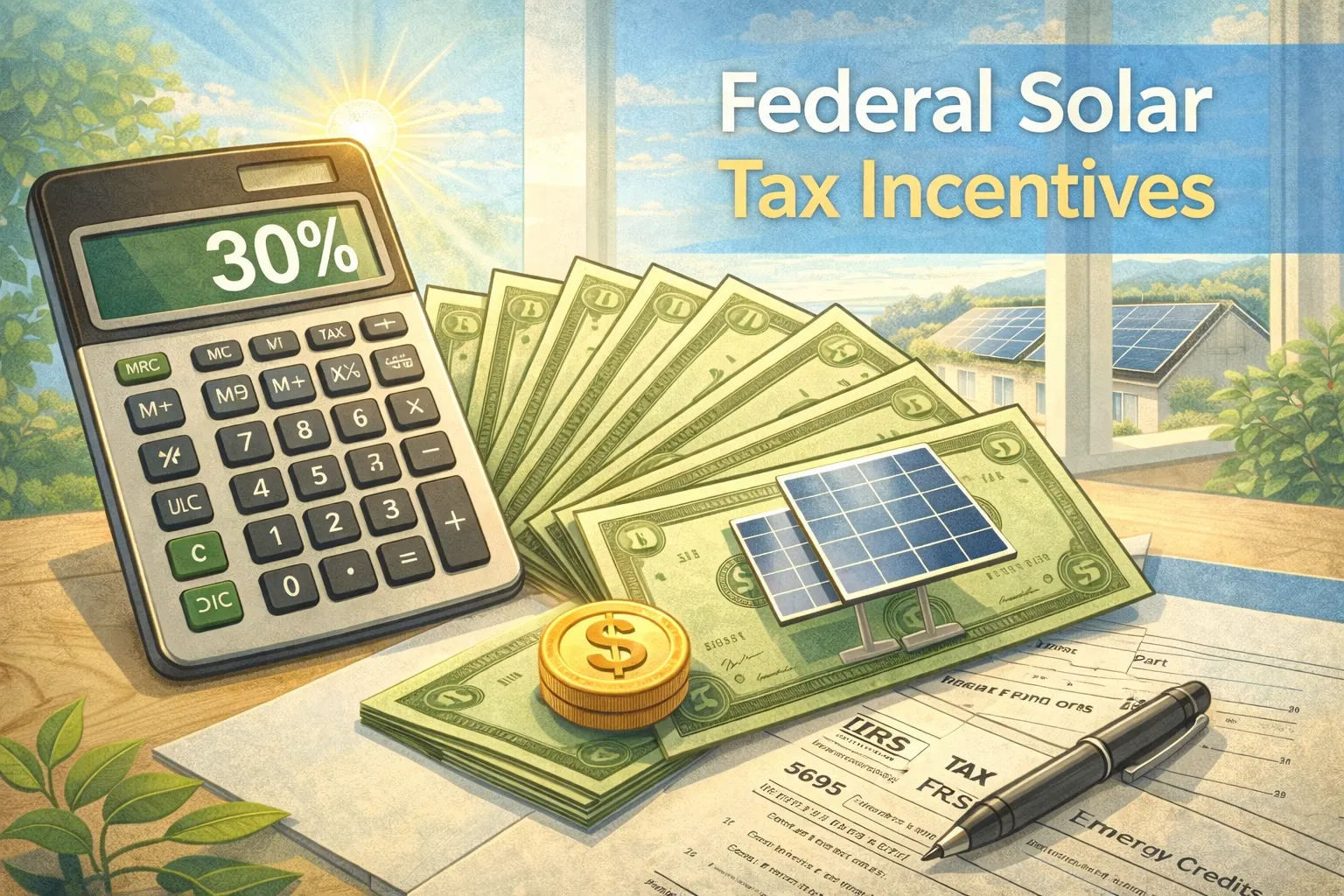
The federal solar Investment Tax Credit (ITC) currently offers a 30% credit on the total cost of your solar installation. For a typical Lake County home system costing $25,000, that’s $7,500 back when you file your taxes. But here’s what many homeowners don’t realize: this incentive is scheduled to step down in the coming years.
Starting your solar installation in April gives you the best chance to complete the project and have your system operational before any potential policy changes. The ITC has already been reduced once in recent years, and while it’s currently at 30%, future reductions are written into the law unless Congress acts to extend it.
Think of it like booking a flight. The price you see today may not be available tomorrow, and waiting to decide often means paying more later. Solar installations typically take 6 to 12 weeks from signing to activation, so a April start puts you on track for summer completion.
Spring Weather Makes Installation Smoother
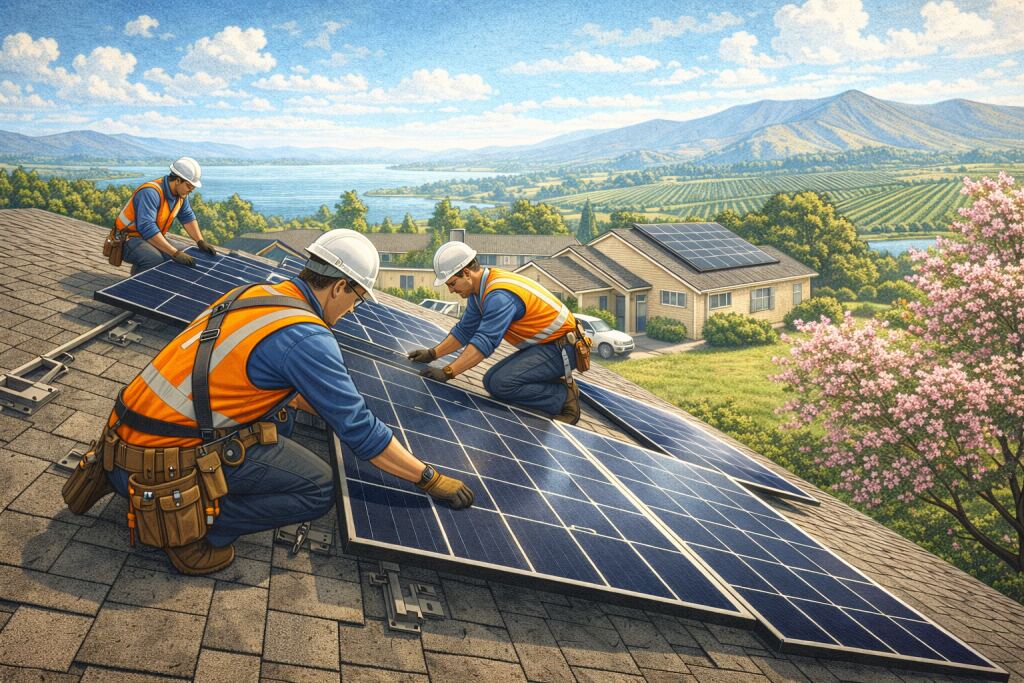
Lake County’s April weather offers ideal conditions for solar installation. Temperatures are mild, making rooftop work more comfortable and safer for installation crews. Unlike summer’s intense heat or winter’s unpredictable rain, spring provides consistent weather windows that keep projects on schedule.
Installation delays don’t just push back when your system goes live. They can also affect your ability to claim incentives for the current tax year. A April installation scheduled to finish in May or June gives you a comfortable buffer, while projects started in fall risk weather-related delays that push completion into the following year.
For homeowners considering ground-mounted systems, spring’s drier soil conditions also make installation easier. Heavy winter rains can complicate trenching and foundation work, while summer’s hard, dry ground requires more effort to excavate.
Beat the Summer Energy Surge
Lake County summers bring high temperatures and climbing electricity bills. Installing solar in April means your system can be generating power before peak cooling season arrives. Instead of watching your utility bill climb through June, July, and August, you’ll be producing your own electricity right when you need it most.
Consider a typical Lake County family. Their April electricity bill might run $150, but by July it often doubles to $300 or more as air conditioning runs continuously. A solar system installed in April or May starts offsetting those costs immediately, potentially saving $500 to $800 over just the first summer.
The timing also matters for net metering. Any excess power your system generates during sunny spring days gets credited to your account, building up credits you can draw from during higher-usage months. Starting in April maximizes this benefit before summer demand peaks.
Equipment Availability and Contractor Scheduling
Solar installation follows seasonal patterns. Many homeowners wait until summer to think about energy solutions, which means contractors’ schedules fill up quickly from May through August. Starting in April often means better availability, more flexible scheduling, and faster project completion.
Supply chain considerations also favor earlier installation. While solar equipment shortages have improved from pandemic levels, global demand for panels and inverters remains high. Securing your equipment order in April reduces the risk of delays from manufacturing or shipping issues that might arise later in the year.
Jonas Energy Solutions has been helping Lake County families go solar for decades. We’ve seen how starting projects in spring consistently leads to smoother installations and happier customers compared to the summer rush.
Financing Options Are Most Favorable Now
Many solar financing programs offer promotional rates or special terms that align with the solar industry’s spring season. Lenders know that this is prime installation time, and they compete for business with attractive offers.
Additionally, getting approved and funded in April means your financing clock starts before summer utility bills hit. Some financing structures base monthly payments on projected energy savings, so having your system operational during high-usage months demonstrates real-world performance quickly.
For Lake County homeowners exploring financing options, spring applications often process faster because lenders aren’t yet handling the summer volume spike.
PG&E Rate Structures and Time-of-Use Plans
PG&E’s time-of-use rate plans charge more for electricity during peak hours, typically late afternoon and evening. Solar production peaks during midday, but battery storage systems allow you to save that power for use during expensive peak periods.
Installing in April gives you months to understand your system’s performance patterns before summer’s highest rates kick in. You’ll learn how much power you generate, when you use it, and whether adding battery backup makes financial sense for your household.
This knowledge becomes invaluable. Rather than guessing about battery capacity needs, you’ll have real data showing exactly how much storage would maximize your savings.
Installation Process and Timeline Expectations

Understanding what happens after you commit to solar helps explain why April timing matters. First, your property undergoes a site assessment to determine optimal panel placement, whether on your roof or via ground-mounted arrays. Then comes permitting, which in Lake County typically takes 2 to 4 weeks.
Once permits are approved, installation usually takes 1 to 3 days for most residential systems. However, final inspection and utility interconnection add another 2 to 4 weeks. This entire process, from signing to producing power, averages 8 to 12 weeks.
Starting in April means completion by May or June. Starting in June might push completion to August or September, missing the peak summer savings opportunity entirely.
Common Questions Lake County Homeowners Ask
Will My Roof Support Solar Panels?
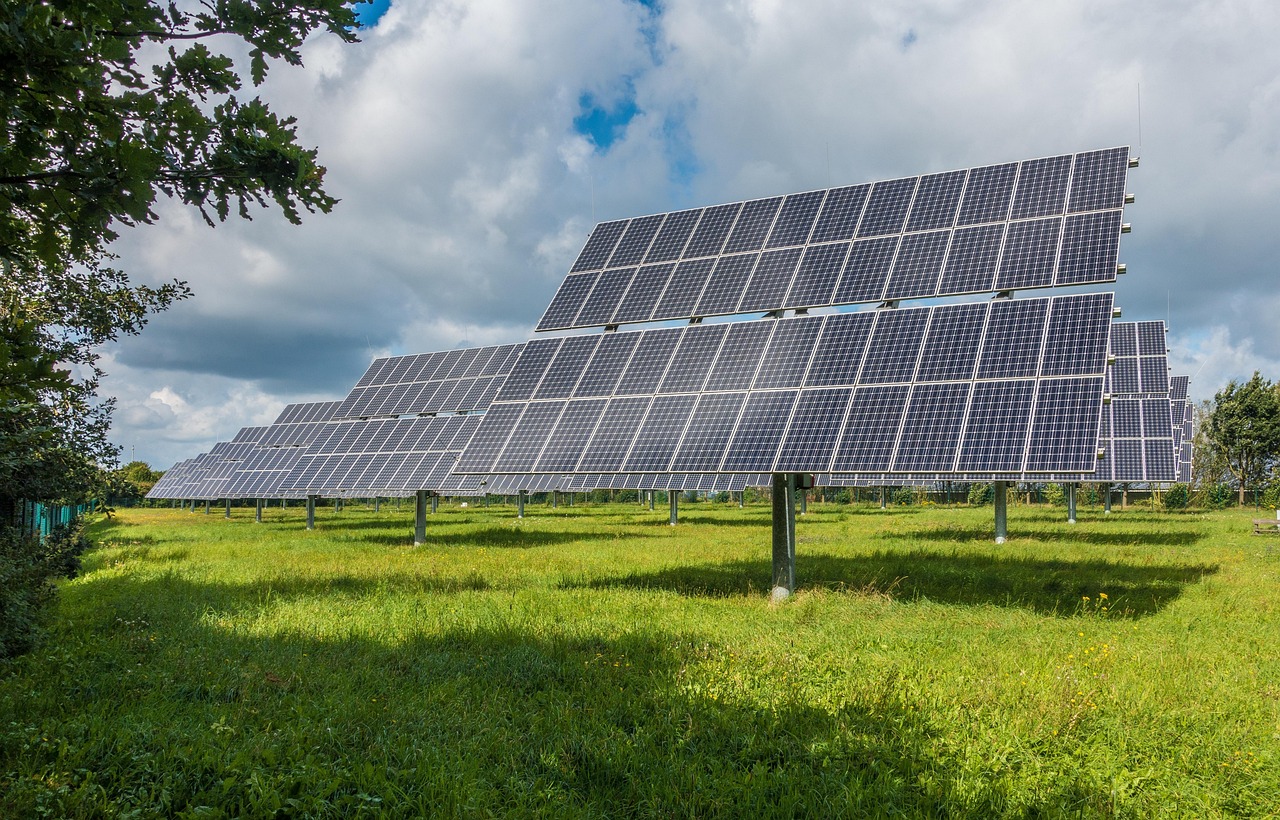
Not every roof is suitable for solar, which is exactly why Jonas Energy Solutions also installs ground-mounted systems. A proper assessment examines roof age, structural integrity, shading, and orientation. If your roof isn’t ideal, ground systems capture solar energy from the best angle regardless of your house’s position.
What Happens During Power Outages?
Standard grid-tied solar systems shut down during outages for safety reasons. However, adding battery backup allows your essential systems to keep running. Given Lake County’s occasional outages, many homeowners choose this option for peace of mind.
How Long Until the System Pays for Itself?
With the 30% federal tax credit, most Lake County systems achieve payback in 7 to 10 years. After that, you’re generating free electricity for the remaining 15 to 20+ years of the system’s life. Starting in April maximizes first-year savings, slightly accelerating this timeline.
Take the Next Step Toward Energy Independence
April’s combination of tax incentives, ideal weather, and strategic timing creates the perfect opportunity for Lake County homeowners to invest in solar. But these advantages only matter if you act on them.
Call Jonas Energy Solutions at (707) 994-5911 to schedule your free solar assessment. Our team will evaluate your property, explain your options for roof or ground-mounted systems, and provide clear pricing with no sales pressure. We’ve been serving Lake County families since 1935, and we’re here to help you make the decision that’s right for your home and budget.
Don’t wait until summer arrives and watch another season of high utility bills go by. Contact us today and discover what solar can do for your Lake County home.