If you have been watching your PG&E bills inch upward and wondering whether solar panels are actually worth the investment, you are not alone. A lot of Lake County homeowners are asking the same question right now. The honest answer is that it depends on your specific home, how you finance it, and what you pair it with. But for most Lake County households, the numbers make a stronger case for solar in 2026 than they did five years ago.
This is not a sales pitch. It is a plain-English breakdown of what solar costs, what it saves, and how to know whether your home is a good fit before you commit to anything.
Why Lake County Homeowners Are Rethinking Solar Right Now

Utility Rates Keep Climbing and Lake County Feels It
PG&E has raised residential electricity rates significantly over the past several years, and that trend shows no sign of reversing. For Lake County homeowners who run HVAC systems for extended stretches during hot summers and cold winters, energy costs are one of the largest recurring household expenses.
Solar essentially locks in a lower effective cost per kilowatt-hour. Once your system is paid off, the electricity it generates is free. Even during the payback period, most homeowners see a net monthly savings when they compare their loan payment against what they were previously sending to their utility.
PSPS Outages Make Energy Reliability a Real Concern
Lake County has experienced some of the most disruptive PSPS (Public Safety Power Shutoff) events in California. When strong winds create wildfire risk, PG&E cuts power to large areas with little notice. For families with medical equipment, seniors, or anyone who depends on refrigeration and climate control, those outages are more than an inconvenience.
Solar panels alone do not keep your home powered during a grid outage. When you pair solar with a home battery system, however, your home can stay powered through most PSPS events without relying on a noisy generator. That pairing is what a growing number of Lake County homeowners are specifically looking for right now.
What Solar Actually Costs in Lake County in 2026
Typical System Size and Price Range
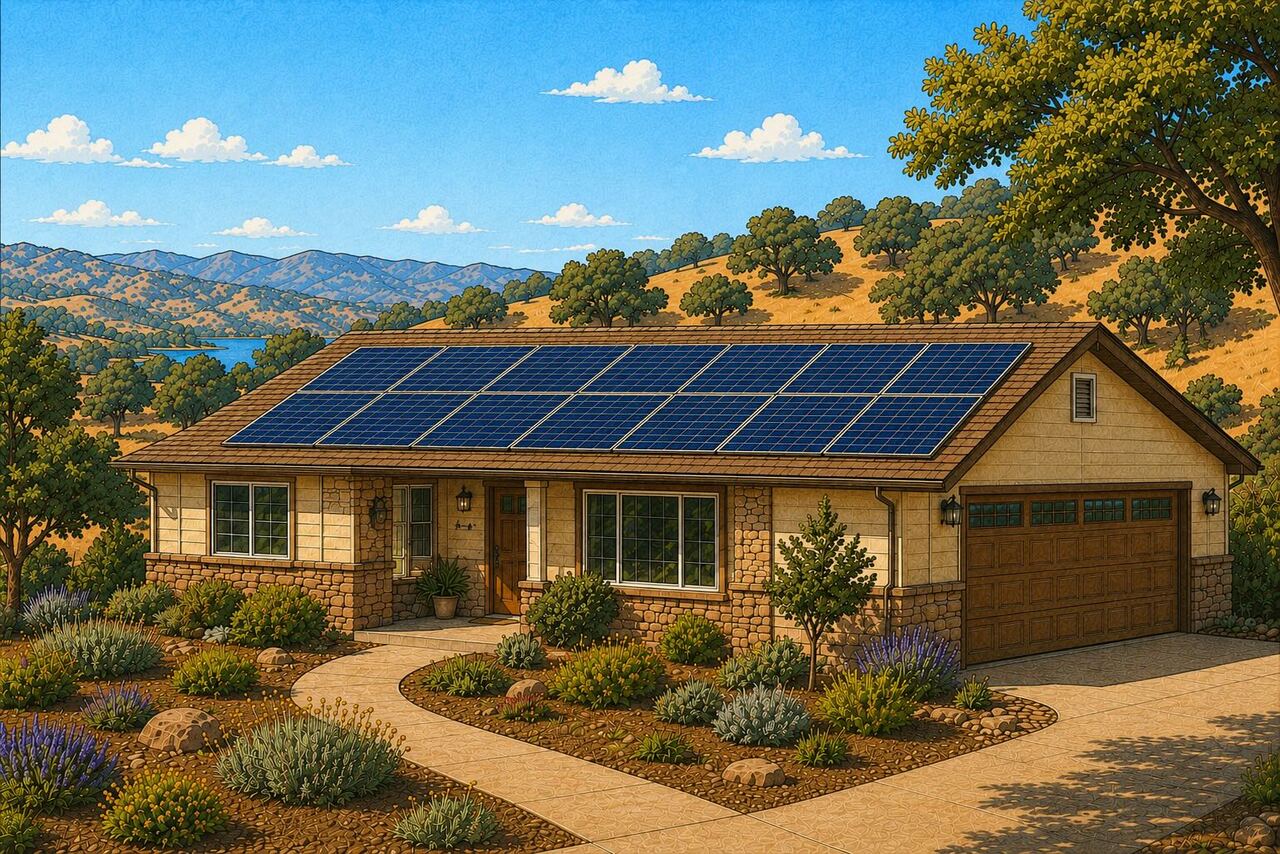
Most Lake County homes require a system between 6 and 12 kilowatts to offset a significant portion of their electricity use. Before incentives, residential solar systems in California typically range from roughly $18,000 to $36,000, depending on system size, roof complexity, and equipment. (Exact pricing varies by property; a site assessment is the only reliable way to get an accurate number for your home.)
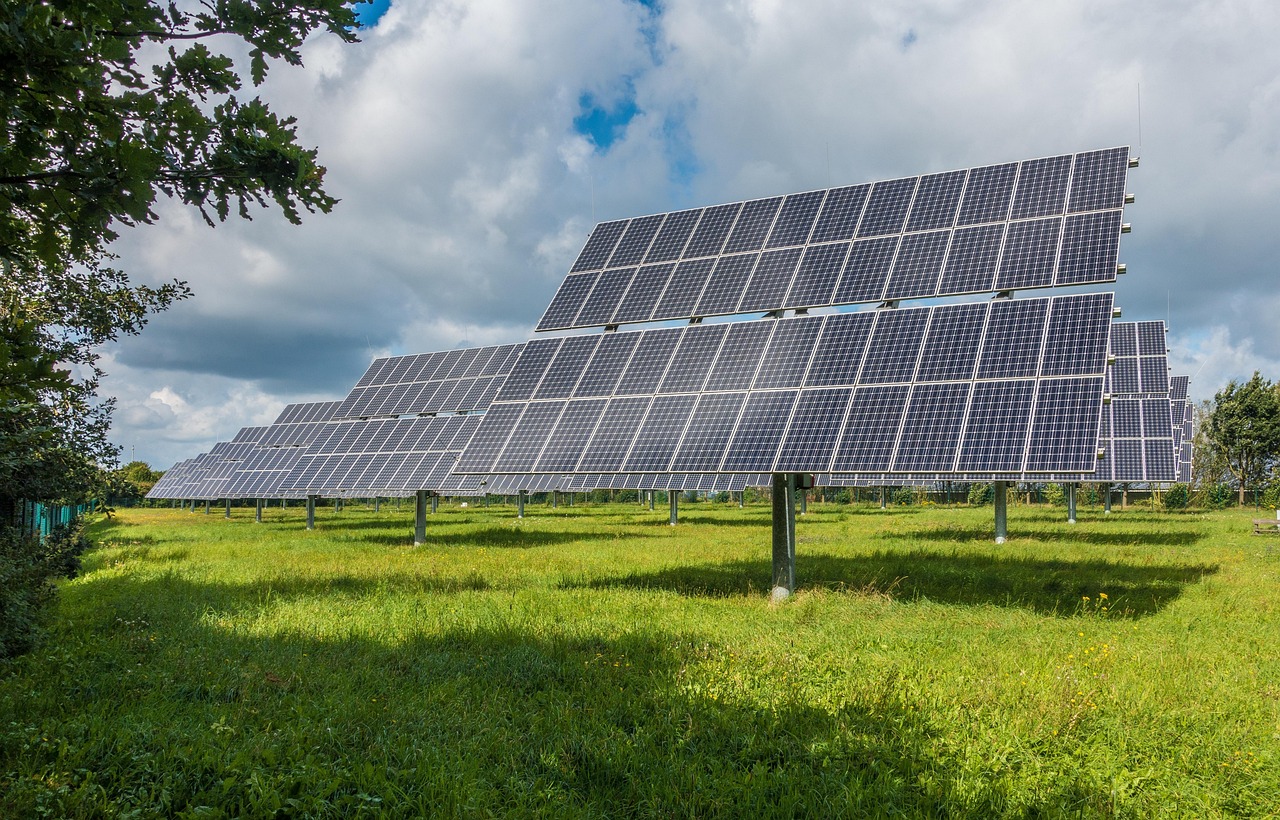
Jonas Energy installs both roof-mounted and ground-mounted solar systems, which matters for homeowners whose roof orientation or shading is not ideal. A ground-mounted system can often be positioned for better production when the roof is not the right fit.
Federal Tax Credits That Can Reduce Your Upfront Cost
Important update for 2026 installs: Per current IRS guidance, the Residential Clean Energy Credit (Section 25D) is available for qualifying systems placed in service through December 31, 2025, and is not available for property placed in service after that date. (This is not tax advice; confirm eligibility and timing with a tax professional.) For the official language, see the IRS page on the Residential Clean Energy Credit.
Because incentives can change, it is worth checking other potential cost reducers that may still apply in California, such as state and utility incentives (for example, battery rebates like SGIP, where available) and local utility programs. Eligibility, funding availability, and rules vary by program and by year. For SGIP details and current program rules, review the California Public Utilities Commission overview.
Separate from tax incentives, financing programs like Redwood Credit Union’s solar loan and California programs like GoGreen can help reduce the upfront cash required by spreading costs into monthly payments. Always review term length, interest rate, and any fees so you can estimate total cost and confirm the payment fits your budget.
How Long Until a Solar System Pays for Itself
Understanding Your Payback Period
A solar payback period is how long it takes for your cumulative energy savings to equal what you paid for the system. In California, the average payback period for a well-sized residential system is roughly 7 to 10 years, though this varies based on your utility rate, system size, and actual usage.
For Lake County homeowners with higher-than-average summer cooling loads, payback timelines can fall on the shorter end because you are offsetting more expensive electricity during the months when bills peak. Higher baseline utility costs mean every kilowatt-hour your panels produce is worth more in savings.
What Your Return Looks Like After Payback
Most solar panels carry a production warranty of 25 years. Once your system has paid for itself, the electricity it generates is essentially free for the remainder of the panels’ usable life. Over a 25-year horizon, the total savings on a properly sized system frequently well exceed the original investment, even accounting for maintenance and occasional component replacements.
For more reading on energy efficiency and home comfort strategies for Lake County, you can browse the full library of resources on the Jonas Energy blog.
Battery Backup: Should You Add It Now or Wait
What a Battery Does That Solar Panels Alone Cannot
This is one of the most common surprises for homeowners new to solar: grid-tied solar panels automatically shut off when the power goes out. This is a required safety feature designed to protect utility workers on the line. So if the grid goes down during a PSPS event and you have solar panels but no battery, your home loses power the same as everyone else on the street.
A home battery stores the electricity your panels generate and makes it available when the grid is down. With the right battery capacity, you can run your refrigerator, lights, essential outlets, and even a ductless mini-split through an overnight or multi-day outage without touching a generator.
How to Decide If Battery Storage Makes Sense for Your Home
If your primary goal is reducing your monthly electricity bill, solar panels alone accomplish that. If your goals include outage resilience and protection from PSPS events, a battery is not optional, it is the core feature.
The cost of adding battery storage at the time of your original solar installation is almost always lower than retrofitting it later. Equipment costs, labor, and permitting are all more efficient when handled together. If backup power is on your list, address it upfront rather than treating it as an upgrade for later.
How Your HVAC System Affects the Equation
An Inefficient System Pulls More Power Than You Think
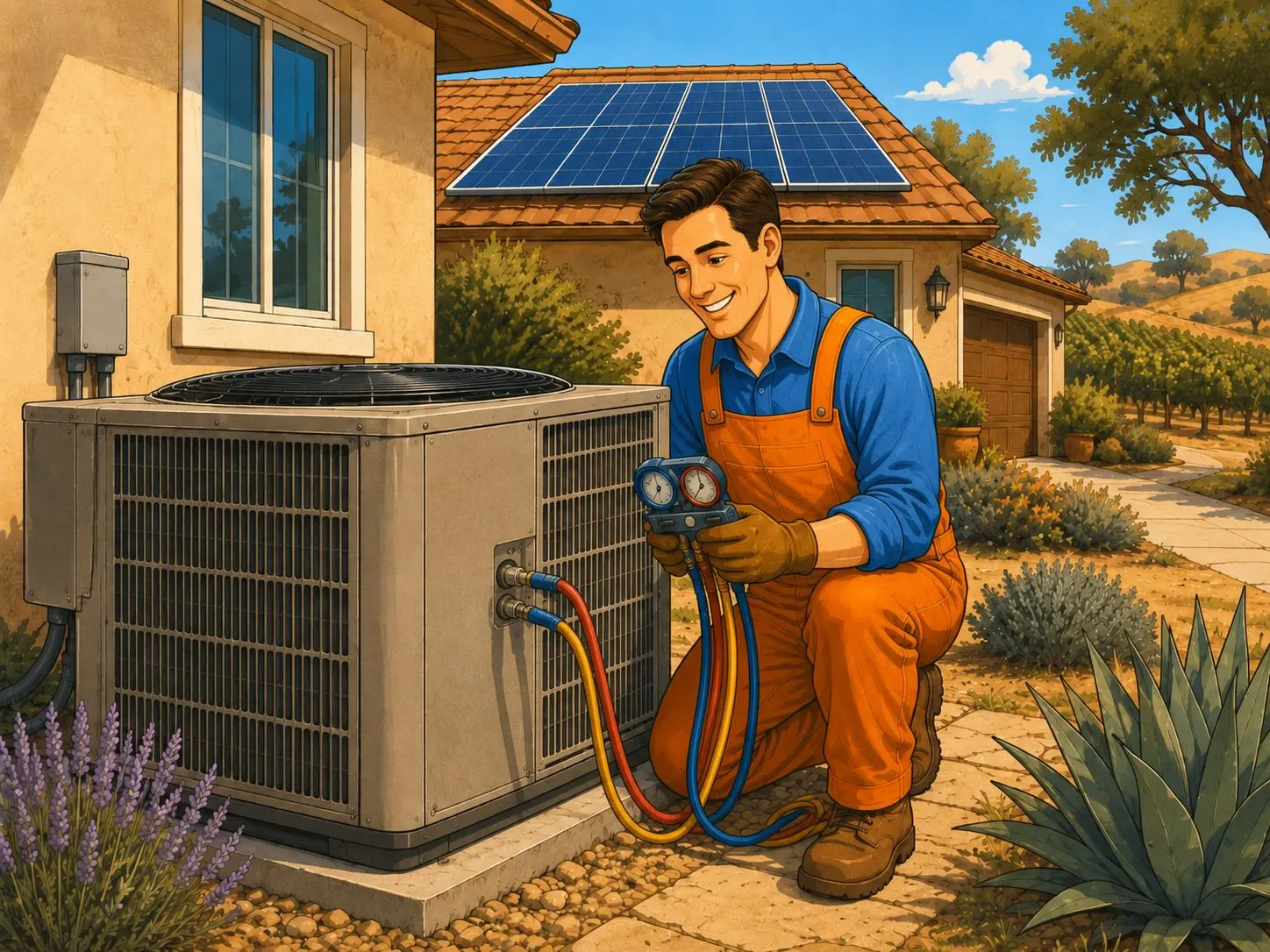
Your HVAC system is typically the largest electricity consumer in your home, accounting for roughly 40 to 50 percent of total energy use during peak months. An aging or improperly sized central air conditioning system works harder than it should, pulls more power, and requires a larger solar array to offset it.
If you are weighing both a solar installation and an HVAC upgrade, the sequence matters. Addressing duct efficiency or equipment sizing before you design your solar array means you size the array for a more efficient load, which can reduce the total system cost. Poor duct condition alone can account for significant energy losses that solar panels will simply compensate for rather than eliminate. Understanding how duct condition and sealing affect your home’s cooling efficiency is a useful first step.
Pairing a High-Efficiency HVAC Upgrade With Solar
Jonas Energy installs both solar systems and high-efficiency HVAC equipment, which means the conversation about how your home uses energy does not have to happen in two separate silos. A ductless mini-split, for example, is significantly more efficient than a standard ducted central system for certain room configurations and home layouts, and it pairs well with solar because it draws less power to produce the same level of comfort.
For homeowners considering a full-system approach to energy efficiency, understanding your home’s total energy picture before committing to any single upgrade leads to better decisions and better outcomes. You can learn more about central air conditioning options available in Lake County.
What Jonas Energy Looks at Before Recommending a System
Roof Orientation, Shade, and Ground-Mount Options
A south-facing roof with minimal shading is the ideal solar candidate. West-facing roofs also perform well in California because they capture afternoon sun during the hours when electricity demand and PG&E rates tend to be highest. Significant shading from trees, chimneys, or neighboring structures reduces panel production in ways that a simple online calculator will not capture.
If your roof is not well-suited, a ground-mounted system is a fully viable alternative. In many cases it outperforms a roof installation because the panels can be oriented and tilted precisely for maximum production. Jonas Energy evaluates both options during the site assessment.
Getting a Realistic Estimate for Your Specific Home
Generic online solar calculators are a reasonable starting point, but they miss the property-specific factors that can shift an estimate significantly in either direction. The only way to know whether solar genuinely makes financial sense for your home is to run the real numbers on your actual usage, roof or ground conditions, shading, and available incentives.
Jonas Energy provides solar assessments for Lake County homeowners that include a realistic system size recommendation, a financing overview, and an honest payback estimate — with no pressure to move forward before you are ready. If solar is the right fit for your home, you will know exactly why. If it is not, you will know that too.
Schedule your solar assessment today and get a clear, no-pressure picture of what solar could mean for your energy costs and home resilience in Lake County. You can also call 707-994-5911 to speak with a local energy specialist.