Cold mornings in Lake County and El Dorado County have a way of turning a lukewarm shower into a real problem. Before you schedule a water heater replacement, a handful of straightforward checks can tell you whether the real culprit is sediment, a failing element, a misadjusted thermostat, or simply a tank that was never sized right for your household. Most hot water shortages are diagnosable, and many are fixable without buying a new unit. Knowing the difference saves you money and gets you back to a hot shower faster.
Why Running Out of Hot Water Is Not Always a Sign You Need a New Water Heater
Running out of hot water can result from sediment buildup, a failed heating element, a misset thermostat, or a tank undersized for current demand. All of which are repairable or adjustable problems that do not automatically require a full replacement. That distinction matters quite a bit when a new tank-style water heater runs anywhere from several hundred to over a thousand dollars installed, not counting the cost of your time and the disruption to your home.
The older housing stock common in foothill communities around Clearlake, Kelseyville, Placerville, and Pollock Pines means many tanks have been in service for a decade or more. Age alone is not a reason to replace. What matters is whether the unit is actually failing or just needs some attention. Reviewing your water heater installation and service options from Jonas Energy Solutions is a useful starting point if you want a clear picture of what repair versus replacement actually looks like for your specific unit.
Check the Thermostat Setting First
What Temperature Should a Water Heater Be Set To
Most water heater thermostats should be set between 120°F and 140°F. A setting that has drifted below 115°F, or a thermostat that has failed entirely, is one of the most common and easily corrected reasons a tank stops delivering adequate hot water. On gas units, the thermostat dial is usually on the front of the gas valve and is simple to adjust. Electric units are a different story: there are typically two thermostats behind access panels on the side of the tank, and both need to be checked. If the thermostat dial feels loose, doesn't click into position, or the water temperature doesn't change after adjustment, the thermostat itself may have failed and will need to be replaced rather than just turned up.
How Cold Incoming Water Affects Performance in Winter
Here's something most homeowners don't think about. In winter, groundwater temperatures in Northern California foothill areas can drop significantly, meaning your tank has to work harder to raise that cold incoming water to the set temperature. The same thermostat setting that kept up fine in August may fall short in January. If your hot water complaints are strictly seasonal, a modest thermostat adjustment, staying within safe limits, may be all you need before calling anyone.
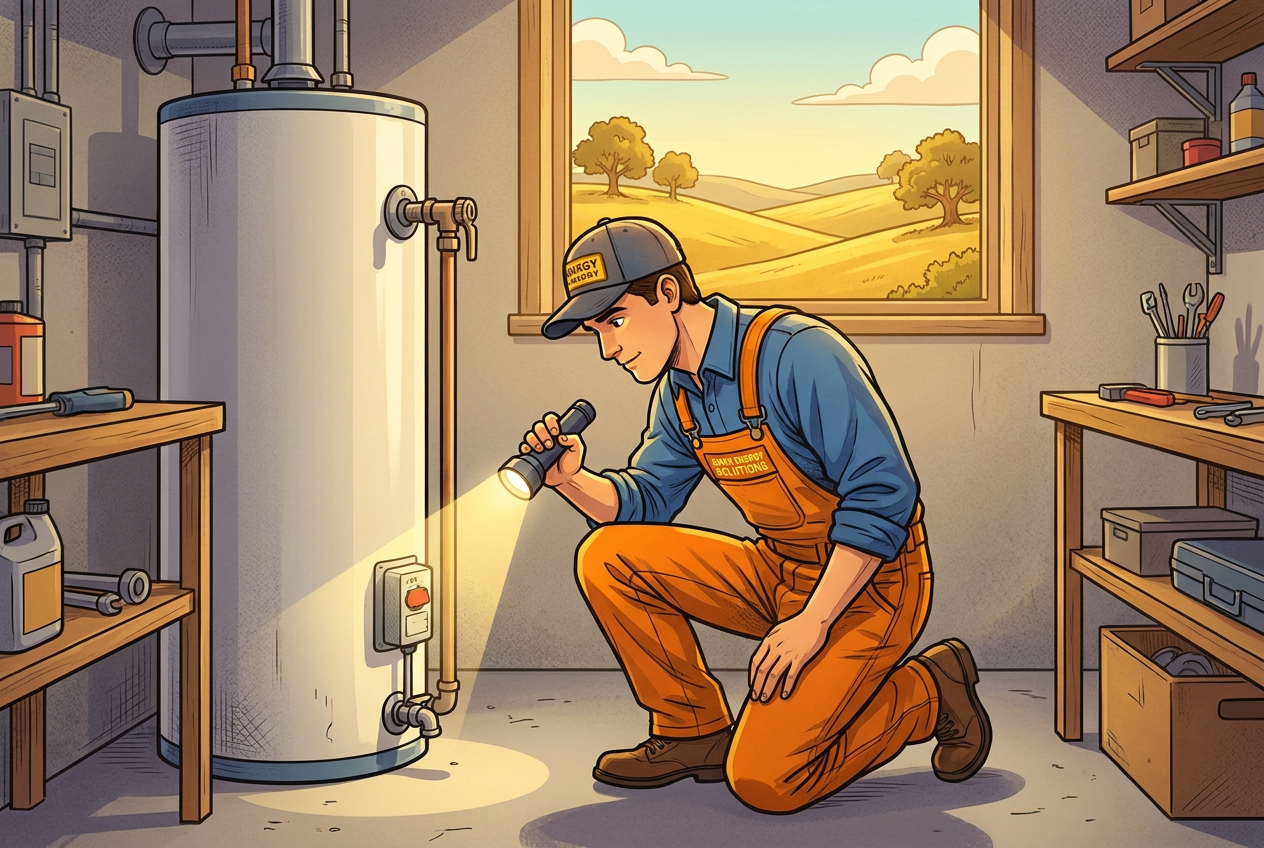
 Flushing sediment from the drain valve is one of the first steps a technician takes when diagnosing a water heater that's losing hot water capacity.
Sediment Buildup Is the Hidden Culprit in Many Older Tanks
How to Tell If Sediment Is the Problem
Mineral sediment accumulates at the bottom of tank-style water heaters over time, and in areas with hard well water, common across rural Lake County and parts of El Dorado County, it builds up faster than most homeowners expect. That layer of sediment sits between the burner or heating element and the water, forcing the unit to work harder and heat less efficiently. Shorter hot water runs, longer recovery times, and higher energy bills are the predictable result.
A few signs point clearly toward sediment as the cause. Listen for popping, rumbling, or cracking sounds coming from the tank during heating cycles, as those noises are steam bubbles working through the sediment layer. You may also notice discolored or slightly gritty water at the tap, or a hot water output that degrades noticeably over a few minutes rather than cutting off all at once.
- Popping or rumbling sounds during the heating cycle
- Hot water that runs out faster than it used to
- Longer recovery time between uses
- Slightly discolored or gritty water at the hot tap
- Higher-than-usual energy bills with no change in usage
What a Flush Can and Cannot Fix
Flushing the tank, connecting a hose to the drain valve and draining the cloudy, sediment-laden water out, can restore meaningful capacity if the buildup is moderate and the tank is otherwise sound. It's a routine maintenance step that many homeowners skip for years, and catching it early makes a real difference. What a flush cannot do is reverse corrosion, repair a cracked tank lining, or restore an element that has burned out from years of working against heavy sediment insulation. The water heater service guides and tips from Jonas Energy Solutions cover this process in more detail if you want to understand what a professional inspection includes.
A Failing Heating Element or Pilot Light Can Mimic a Dead Water Heater
Electric Water Heaters and Dual-Element Problems
Most electric tank water heaters use two heating elements: an upper element that heats the top portion of the tank quickly, and a lower element responsible for heating the bulk of the stored water. When the lower element fails, you still get a small amount of hot water from the top of the tank, but it runs out in a fraction of the time you'd expect. This pattern, brief hot water followed by a sudden cold drop, is one of the clearest signs of a failed lower element. The fix is a parts-and-labor repair, not a full replacement.
Worth checking before you call anyone: the reset button on the high-limit thermostat. It can trip and cut power to one or both elements. Pressing it back in sometimes restores function entirely. If it trips repeatedly, that's a sign of an underlying issue that warrants a professional look.
Gas Water Heaters and Pilot or Thermocouple Issues
On a gas water heater, a pilot light that won't stay lit is often a thermocouple problem. The thermocouple is a small safety sensor that tells the gas valve the pilot is burning. When it wears out, the valve shuts off gas flow as a safety measure, and the burner won't ignite. No heat, no hot water. Thermocouple replacement is a relatively inexpensive repair. A complete gas valve failure is more involved but still far less costly than a full tank replacement in most cases.
 When a tank is simply too small for current household demand, upgrading to a heat pump water heater can solve the problem and significantly reduce energy costs.
When the Real Problem Is Tank Size Not Equipment Failure
Sometimes the tank isn't broken. It's just too small. If your household has grown, you've added high-demand appliances, or your morning routine has shifted, no repair in the world will fix an undersized tank. Upgrading to a larger unit or switching to a tankless or heat pump water heater is the right call in this case, and it's worth thinking through carefully before spending money on repairs to a unit that was already falling short of your actual needs.
A standard 40-gallon tank is typically sized for two to three people with moderate usage. Add a teenager, a new household member, a soaking tub, or a high-flow showerhead, and that same tank falls short every morning. The math is straightforward once you lay it out. Sizing your next water heater correctly, whether tank, tankless, or heat pump, is one of the most important decisions in the process, and it's worth getting right the first time.
- Count the number of people currently in your household, including any recent additions
- Note any new high-demand fixtures or appliances added in the past few years
- Consider whether peak usage times have shifted, such as multiple people showering in the same morning window
- Ask a technician to calculate the first-hour rating you actually need before selecting a replacement size
For homeowners who want to upgrade rather than replace like-for-like, financing options for a water heater upgrade are worth reviewing so cost doesn't become the reason you end up with another undersized unit.
Signs It Actually Is Time to Replace Your Water Heater
Age and Corrosion Warning Signs
Tank-style water heaters have a typical service life of 8 to 12 years, sometimes longer with good maintenance. Past that window, the calculus shifts. Rust-colored water at the hot tap, visible corrosion around the tank fittings or base, or water pooling beneath the unit are signs the tank itself is failing. A leaking tank is not repairable. Neither is a tank with significant internal corrosion. At that point, replacement is the right call, and the sooner the better to avoid water damage. A maintenance plan can help you track equipment age and catch these warning signs before they become emergencies.
How a Heat Pump Water Heater Can Cut Energy Costs and Qualify for a Tax Credit
When replacement is the right answer, the type of unit you choose matters as much as the brand. Heat pump water heaters use ambient air to heat water rather than direct electric resistance, making them two to three times more efficient than a standard electric tank. For homeowners in Lake County and El Dorado County already dealing with high energy costs, that efficiency difference shows up on every utility bill. As of the current federal tax credit guidelines, qualifying heat pump water heaters may be eligible for a 30% federal tax credit under the Inflation Reduction Act, though tax situations vary and you should confirm eligibility with a tax professional. Exploring heat pump water heater installation and replacement services is a practical next step if your current unit is nearing end of life.
How do I know if my water heater just needs a repair or should be replaced?
Age is the starting point. Units under 8 to 10 years old with no active leaks or corrosion are usually worth repairing. Units past 12 years, showing rust, leaking from the tank body, or requiring repeated repairs are better candidates for replacement. A technician can assess the specific condition of your unit and give you a clear recommendation.
Can I flush my water heater myself to remove sediment?
Yes, a basic flush is something many homeowners can do themselves using a garden hose connected to the drain valve. However, on older tanks, a drain valve that has not been used in years may not reseat properly after being opened, and disturbing heavy sediment can sometimes accelerate problems. If you are unsure about the condition of your tank or the drain valve, having a technician do the flush as part of an inspection is a reasonable approach.
Why does my hot water run out faster in winter than in summer?
Cold groundwater temperatures in winter mean your water heater has to raise incoming water through a larger temperature difference to reach the set output temperature. This reduces effective capacity and recovery speed. A modest thermostat adjustment within the safe operating range, or switching to a tankless unit that heats on demand, can address this pattern.
What is a heat pump water heater and is it right for my home?
A heat pump water heater extracts heat from surrounding air and transfers it to the water in the tank, making it significantly more efficient than a standard electric resistance unit. It works best in spaces with adequate ambient air volume, such as a garage or utility room, and in climates that do not stay extremely cold for extended periods. Lake County and El Dorado County climates are generally well-suited to heat pump water heaters. A technician can assess your space and usage to confirm fit.