The first hard frost settles over the foothills, you turn up the thermostat, and nothing happens. If your oil furnace won't start, a short list of safe checks can solve the simple causes. Just as important, a few warning signs tell you exactly when to stop and call a professional. This guide is written for Placerville and El Dorado County homes that rely on oil heat, and it sticks to what an ordinary homeowner can safely do.
Why Oil Furnaces Quit on the First Cold Snap in the Foothills
Often the culprit is simple. Thermostat settings, a tripped power switch, an empty or nearly empty tank, or a clogged filter can each keep a furnace off. After months of idling, any weak point tends to show up the first time heat is demanded. Check these before assuming a major failure.
Natural gas never reached the road for a lot of rural El Dorado County homes, so they heat with oil. That makes a silent furnace more than an inconvenience. The system has sat idle since spring, and that first real call for heat is often the moment a small problem finally reveals itself.
One boundary up front. This guide covers safe homeowner checks only. Fuel lines, burner parts, nozzles and combustion adjustments belong to a licensed technician (our heating services team handles that side of the work). And if the oil furnace is not working after the checks below? You will at least know what to tell the person you call.
Start With the Thermostat, Power Switch, and Filter
Begin with the easy stuff. No tools needed, and nothing here involves opening the burner compartment.
Thermostat settings and batteries
Make sure the thermostat is set to heat, not cool or off. Then nudge the target several degrees above the current room temperature so the system actually receives a call for heat. Blank or dim display? That usually means dead batteries, and fresh ones take about a minute to swap.
The furnace power switch and breaker
Most oil furnaces have a wall-mounted switch that looks like an ordinary light switch, often near the stairs or on a nearby wall. It gets flipped off by accident more often than you would expect. Confirm it is on. Then check the breaker panel.
Foothill outages and PSPS events matter here too. After a recent outage, the furnace may simply need steady power restored before it can run, and homes that lose heat every time the lines go down may want to look at backup power options for outage-related shutdowns. As for a tripped breaker, flip it back on only once. Trips again? Stop and call.
A clogged air filter
A filter packed with dust restricts airflow, and that alone can cause the system to shut itself down. Slide it out. Hold it up to a light, and if you cannot see through it, replace it.
- Set the thermostat to heat, several degrees above room temperature.
- Swap in fresh thermostat batteries if the display is dim or blank.
- Confirm the wall-mounted furnace switch is on.
- Check the breaker, and reset it once at most.
- Inspect the air filter, and replace it if it is dirty.

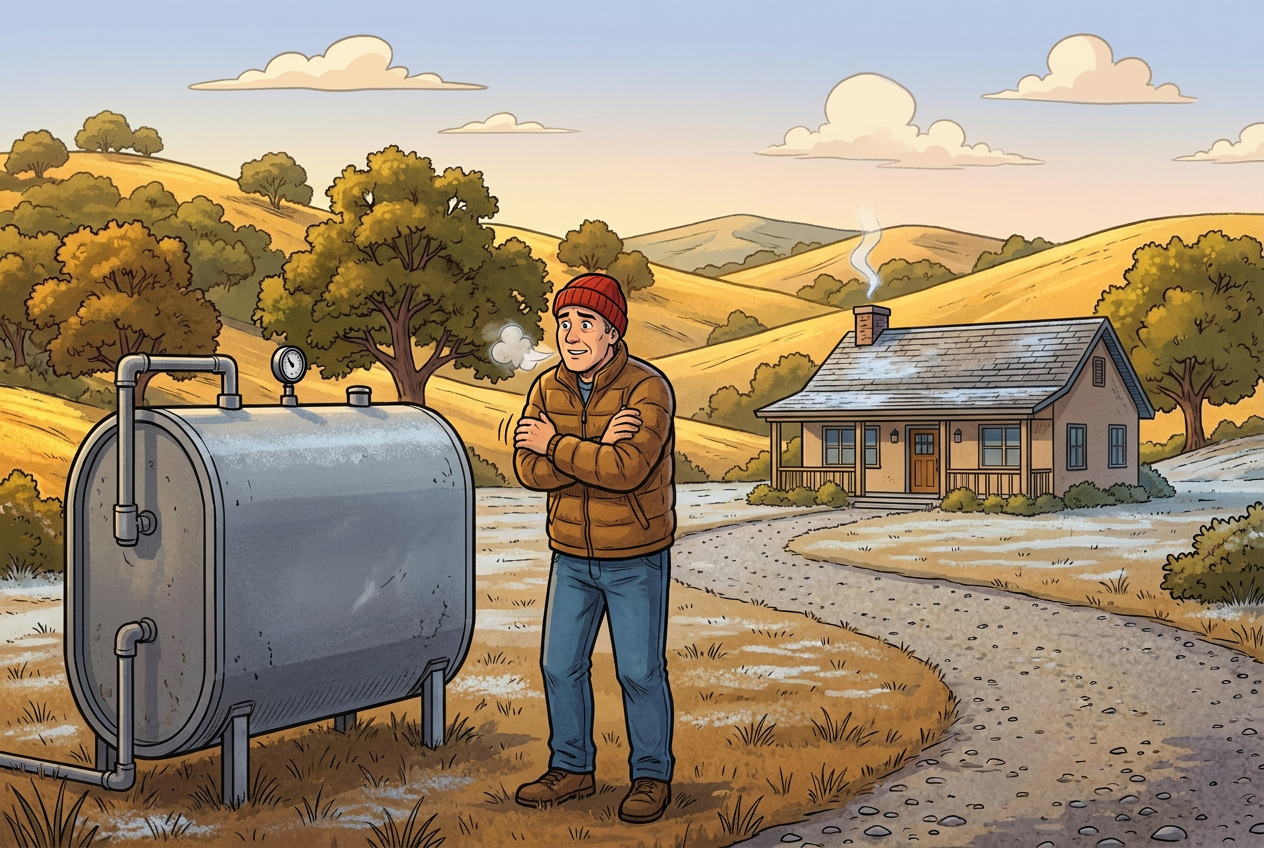
A quick look at the tank gauge at the start of cold weather can head off a no-heat morning.
Check Your Fuel Level and Delivery Timing Before Anything Else
This is where oil heat differs from gas, and where rural homes get caught. Nobody meters your fuel for you. Let the tank run low, and the furnace has nothing to burn.
Reading the tank gauge safely
Walk out to the tank and look at the gauge. That is all. Leave the fill cap closed, and keep your hands off the lines and valves. Gauges can be hard to read, and they can stick, so a reading that looks fine on a cold morning is not always the whole story. If the level looks low, call your fuel supplier.
Delivery schedules for remote properties
A tank can run low before the next scheduled delivery. Long gravel driveways, steep grades and winter storms can all slow a truck on its way to a remote property. Worth asking your supplier how they handle your road when the weather turns.
A simple habit helps here. Check the gauge at the start of cold weather and again before a storm. It takes a minute. As a general caution, a tank that runs completely dry can mean extra work to get the system running again, which is why a low reading is worth acting on early rather than late.
How to Use the Reset Button One Time, the Right Way
The reset button on an oil burner is a safety control that stops fuel flow when the burner does not light as expected. Follow your manufacturer's instructions, press it once, and wait. If the furnace locks out again, leave the button alone. Repeated resets can flood the combustion area, and they signal a problem needing a technician.
Your furnace manual is the authority here. Procedures and button locations vary from model to model, which is why we won't walk you through a specific one. Find the button where the manual says it is, press it once, and give the system time to respond.
Do not open the burner housing. Do not try again and again. One reset is a reasonable test, and a second lockout? That is information.

When warning signs appear, stepping back and calling a licensed technician is the safest next move.
Stop and Call When You See Smoke, Soot, or a Strong Fuel Smell
Smoke, soot, and strong fuel odors
Some signs mean the troubleshooting is over. If you smell strong fuel or see smoke, step outside and call. Forget about restarting the furnace at that point. A serious fuel odor or any fire danger may call for emergency services, so treat it as urgent.
Lockouts that keep coming back
A furnace that locks out after one reset is telling you something is wrong inside the system. Pressing the button harder, or more often, won't fix it.
- Visible smoke from the furnace or around it
- Soot around the furnace, vents or nearby walls
- A strong fuel smell in the house or near the tank
- A lockout after you have pressed the reset button once
- A breaker that trips a second time
- Banging or puffing sounds at ignition
When you are ready to talk to someone, contact the Jonas Energy Solutions team by phone or through the form. Our site lists 24/7 emergency service. In El Dorado County, call (530) 621-0503. Over in Lake County, the number is (707) 994-5911. (Please confirm oil-system service and brand coverage with the El Dorado office when you call.)
Keep the Heat On This Winter With Maintenance and Smart Next Steps
Most no-heat mornings can be avoided with a short routine. Check the tank gauge monthly once the weather turns cold. Replace the filter on schedule. And book a tune-up before the first freeze, not after it.
An annual maintenance plan is one way to keep that tune-up from slipping off the calendar, and members get a reduced trip fee. Current terms? Just ask when you call.
Breakdowns that keep recurring raise the repair versus replace question, and our post Upgrade Your Oil Furnace in Placerville Before Winter walks through it. Curious about another way to stay warm? See Can a Heat Pump Keep an El Dorado County Home Warm in a Freeze? Both are easy to find among our related heating articles.
Frequently Asked Questions
How many times should I press the oil furnace reset button?
Once. Follow your manufacturer's instructions, press it a single time, and wait. If the furnace locks out again, stop and call a licensed technician rather than pressing it repeatedly.
Can I add fuel or touch the tank lines myself?
No. Looking at the gauge is fine, but do not open the fill cap or touch lines or valves. If the level is low, call your fuel supplier. Fuel lines and burner parts are work for licensed technicians.