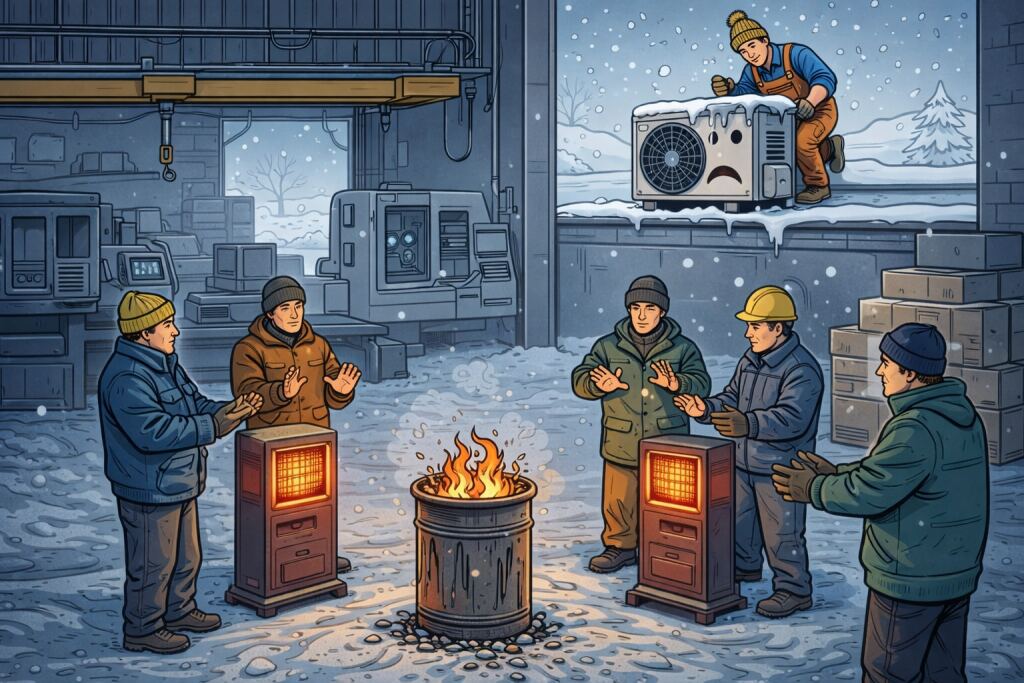
When your commercial HVAC system fails in July, it’s inconvenient. When it fails in January, it can shut down your entire operation. Winter breakdowns don’t just cost more to fix; they cost more in every measurable way. Lost revenue, emergency service fees, and potential property damage add up fast when temperatures drop and your heating system stops working.
For Lake County business owners, winter HVAC failures represent a perfect storm of bad timing, high demand, and operational consequences that summer breakdowns simply don’t create. Understanding why these failures cost so much more starts with recognizing what makes winter different.
The Real Cost of Winter Downtime
A restaurant that loses air conditioning in summer can open windows, bring in fans, and stay operational. A restaurant that loses heat in winter often has no choice but to close entirely. Employees can’t work in freezing conditions, customers won’t stay, and in some cases, health codes won’t allow it.
This difference in operational impact explains why winter HVAC failures cost significantly more than summer ones. The direct repair costs might be similar, but the indirect costs multiply quickly. Every hour your business stays closed represents lost revenue that you can’t recover. For retail stores during holiday shopping season, a single day of closure can mean losing thousands in sales. For offices, it means paying employees who can’t work or scrambling to find alternative workspace.
Emergency service calls during winter also come with premium pricing. When every HVAC company in Lake County has a full schedule of urgent calls, you’re competing with other businesses for limited service availability. The technician who might arrive within a few hours in October could take two days to reach you in January. That extended wait time translates directly into extended losses.
Why Commercial Systems Fail More Often in Winter
Commercial HVAC systems face unique challenges during cold months that residential systems don’t encounter. The sheer size of commercial equipment means more components working harder under greater stress. A small efficiency loss that wouldn’t matter much in moderate weather becomes critical when your system runs continuously for days.
Increased Runtime Creates Cascade Failures
Think of your commercial HVAC system like a delivery truck. Driving a few hours a day causes normal wear. Driving 24 hours straight reveals every weak point in the vehicle. Winter heating demands force commercial systems into continuous operation, and any component that was already weakening will likely fail under sustained load.
When one part fails during peak operation, it often triggers problems in connected systems. A blower motor that overheats can damage the control board. A clogged filter that goes unnoticed creates pressure problems throughout the system. These cascade failures turn a relatively simple repair into a complex, expensive project.
Cold Weather Affects System Components
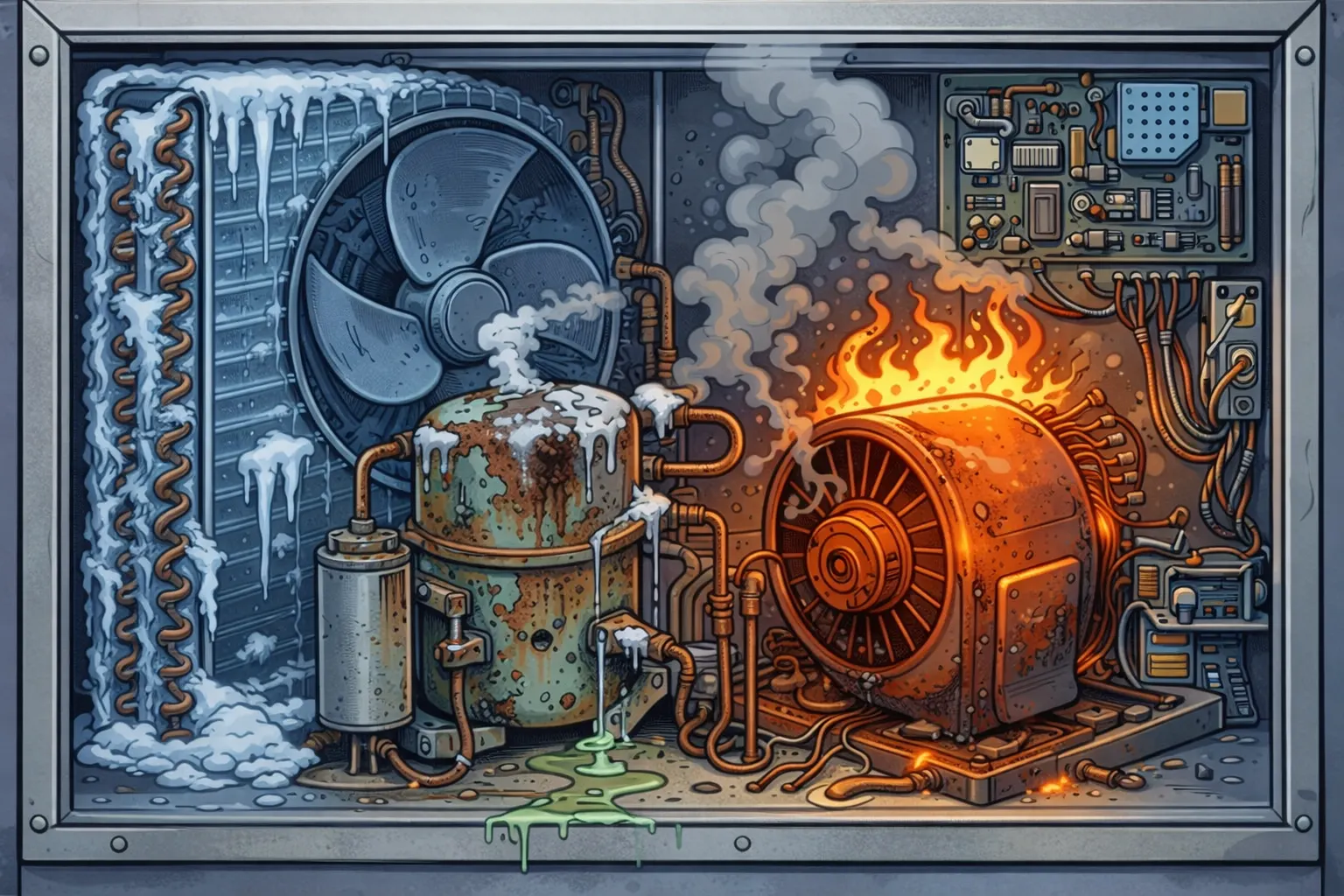
Outdoor equipment deals with temperature extremes that indoor components never face. Condensate lines freeze. Refrigerant behaves differently in cold temperatures. Metal contracts, creating gaps in connections that were sealed during warmer months. Lubricants thicken, making motors work harder.
Lake County’s winter weather patterns create specific challenges for commercial HVAC systems. Morning temperatures near freezing followed by afternoon warming cause repeated expansion and contraction cycles. This thermal stress accelerates wear on outdoor components and connections. Systems installed during summer months might develop their first leaks during the first hard freeze as materials contract and joint compounds that seemed adequate prove insufficient.
Hidden Costs Beyond the Repair Bill
The invoice from your HVAC contractor tells only part of the story. Winter heating failures create costs that don’t appear on any service ticket but hit your bottom line just as hard.
Property Damage from Temperature Extremes
Commercial buildings without heat face risks that go beyond employee comfort. Frozen pipes burst, creating water damage that costs far more than the original heating repair. Computer systems and electronic equipment can be damaged by extreme cold. Inventory might be affected, depending on what you store.
A medical office that loses heat overnight might find that temperature-sensitive supplies and medications are no longer usable. A retail store might discover that certain products were damaged by freezing temperatures. These losses often aren’t covered by basic insurance policies, leaving business owners to absorb the full cost.
Employee Productivity and Safety
Even if you can technically stay open during a heating failure, employee productivity drops dramatically when people are cold. Workers spend time finding ways to stay warm instead of focusing on their jobs. Morale suffers. In some cases, continuing to operate without adequate heat creates legitimate safety concerns and potential liability issues.
Sending employees home with pay maintains goodwill but increases your costs. Asking them to work in uncomfortable conditions risks losing good people and creates potential workers’ compensation claims if anyone gets sick.
Prevention Costs Less Than Emergency Repairs
Every business owner knows that preventive maintenance costs less than emergency repairs, yet many commercial buildings enter winter without proper HVAC preparation. The gap between knowing and doing often comes down to timing and priorities. Summer feels like the wrong time to think about heating, and by the time cold weather arrives, you’re already behind.
A comprehensive maintenance visit addresses the specific failure points that cause most winter breakdowns. Technicians check components under the stress conditions they’ll face during actual operation. They identify worn parts before they fail and adjust settings for winter performance requirements. This proactive approach catches problems when you still have time to address them on your schedule, not during an emergency.
The cost difference between planned maintenance and emergency service extends beyond just the service call. Parts ordered in advance cost less than parts needed immediately. Scheduled work happens during normal business hours at standard rates. Most importantly, maintained systems simply break down less often, reducing the overall number of service calls you need.
Planning for Winter Reliability
Smart commercial building managers don’t wait for problems to develop. They build relationships with HVAC contractors before winter arrives, ensuring priority service when they need it. They budget for maintenance as an operational expense, not as an optional cost to cut when times get tight.
Consider creating a winter readiness checklist that includes HVAC inspection, backup system verification, and emergency contact information. Make sure your entire team knows what to do if heating fails, including who to call and what immediate steps to take to minimize damage. Document your system’s maintenance history so you can track patterns and anticipate future needs.
For aging commercial HVAC systems, winter often reveals that repair costs are approaching replacement value. If you’re spending more on emergency repairs than a new system’s annual maintenance would cost, it’s time to have a serious conversation about replacement options. Modern commercial HVAC systems offer significantly better efficiency and reliability than equipment from even ten years ago.
What Lake County Businesses Should Do Now
If you’re reading this during winter, check your HVAC system’s recent performance. Strange noises, uneven heating, or increased runtime all signal potential problems developing. Don’t wait for complete failure. A service call now, while your system still works, costs far less than an emergency call after it quits.
If you’re reading this during warmer months, schedule fall maintenance before the rush begins. Commercial HVAC contractors fill their schedules quickly once cold weather approaches. Early scheduling ensures you get the service time you need without competing with dozens of other businesses.
Jonas Energy Solutions has served Lake County commercial buildings for decades, and we’ve seen how winter HVAC failures impact local businesses. Our approach focuses on preventing problems before they become emergencies. We understand the unique challenges of commercial systems in our climate, and we work with business owners to develop maintenance plans that fit their operational needs and budgets.
Don’t let winter catch you unprepared. Contact Jonas Energy Solutions at (707) 994-5911 to schedule a commercial HVAC assessment. We’ll evaluate your system’s condition, identify potential failure points, and recommend solutions that keep your business running all winter long. Whether you need maintenance, repair, or are considering system replacement, our team brings the expertise Lake County businesses count on when comfort and reliability matter most.