Summer in Lake County comes with high heat, elevated wildfire risk, and a power grid that works hard to keep up. When the grid strains during a heat wave, or when PG&E initiates a Public Safety Power Shutoff, the result is often brownouts, sudden outages, and voltage spikes that can do real damage to your air conditioner, mini-split, or heat pump.
Most homeowners do not think about surge protection until something breaks. By then, the timing is usually the worst possible: the middle of August, technicians are booked out, and parts are on backorder. This guide explains what actually happens to HVAC equipment during power events, why today’s high-efficiency systems are especially vulnerable, and what you can do right now to protect your home before the next outage hits.
What Happens to Your AC During a Power Surge or Brownout
A brownout and a power surge are not the same thing, and each threatens your HVAC system in a different way.
The Difference Between a Brownout and a Power Surge
A brownout is a partial reduction in voltage. The lights dim, fans slow down, and equipment runs under stress it was not designed for. Your AC compressor may struggle to start or run inefficiently for extended periods. Repeated brownout events accelerate wear on components that would otherwise last for years.
A power surge is a sudden spike in voltage, often lasting only milliseconds. Surges happen when power is restored after an outage, when lightning strikes nearby utility infrastructure, or when large electrical loads switch on and off in the neighborhood. A single strong surge can destroy the control board in a high-efficiency system outright.
Why Modern HVAC Systems Are More Vulnerable Than Older Ones
Older single-speed AC units used simple mechanical controls that tolerated electrical irregularities fairly well. Today’s systems, including variable-speed compressors, smart thermostats, and communicating heat pumps, rely on sensitive electronic control boards. These boards can cost $500 to $2,000 or more to replace, and they have little tolerance for voltage swings.
Mini-split systems use inverter-driven compressors that are particularly sensitive to power quality. A surge that would have tripped a breaker on an older system can damage the main circuit board on a modern ductless unit, often without any obvious sign of the failure until the system stops working days or weeks later.
What Power Events Look Like in Lake County
Lake County homeowners experience a range of power quality issues throughout the year, but especially during summer. Common events include:
- Flickering lights when the AC kicks on
- Brief outages followed by sudden power restoration
- PG&E Public Safety Power Shutoff (PSPS) events during high fire-risk periods
- Momentary voltage dips during peak regional demand
- Power cycling when a neighbor’s large load switches on or off
Each of these events stresses HVAC components, particularly at startup when compressors draw their highest current.
The Real Cost of HVAC Surge Damage
Putting dollar figures on the risk makes the case for prevention much clearer.
Control Board and Compressor Replacement Costs
Replacing a control board on a modern inverter mini-split or high-efficiency central AC unit typically runs between $400 and $2,500 depending on the system and part availability. Compressor replacement, when surge damage causes a hard-start failure, can reach $1,500 to $3,500 or more for parts and labor. In some cases, the repair cost approaches or exceeds the value of the system, making full replacement the more practical option.
Why Mid-Summer Failures Hit Hardest
A breakdown in July or August is the worst possible timing. HVAC technicians across Lake County are busiest during heat waves, and wait times for parts or service can stretch from several days to more than a week. A home without cooling during a stretch of 100-plus-degree weather in Lakeport or Clearlake is not just uncomfortable. It is a genuine health concern for older adults, young children, and anyone managing a medical condition.
When Damage Shows Up Later, Not Immediately
This is one of the more frustrating realities of surge damage: your system may keep running after a power event and then begin showing degraded performance or intermittent faults over the following weeks.
A surge that partially damages a control board can cause the system to run erratically, short-cycle, or fail completely well after the original event. By the time you call for service, the connection to the surge may not be obvious, and diagnosing it takes extra time.
Your Two Layers of HVAC Surge Protection
Effective protection for your AC or mini-split involves two separate devices working together. Relying on just one of them leaves a meaningful gap.
What Whole-Home Surge Protectors Cover and What They Miss
A whole-home surge protector installs at your main electrical panel and intercepts large voltage spikes before they reach your home’s circuits. It provides broad protection for every appliance and device in the house and is a strong first layer. But it is not enough on its own for HVAC equipment.
Whole-home protectors are designed to handle major external surges caused by events like a nearby lightning strike or a large grid disturbance. They may not fully suppress the smaller but still damaging transient spikes generated inside the home by motors starting and stopping, including your own compressor, refrigerator, or well pump.
Dedicated HVAC Surge Protectors as the Second Layer
A dedicated surge protector wired directly to your outdoor AC unit or mini-split provides targeted protection at the equipment level. It absorbs the smaller, repetitive transient surges that a whole-home device may pass through. Industry professionals broadly recommend layered surge protection for sensitive home equipment, including HVAC systems — one device at the panel and a dedicated unit at the equipment itself.
The combination of whole-home plus dedicated HVAC surge protection is what Jonas Energy Solutions recommends for homes in Lake County, particularly those with higher-efficiency systems, newer mini-splits, or variable-speed equipment.
Why Mini-Splits and Ductless Systems Need Special Attention
Ductless mini-split systems are installed in a growing number of Lake County homes, both as primary systems and for room additions or zone control. Because of their inverter-based compressors and sophisticated printed circuit board electronics, mini-splits are among the most surge-sensitive HVAC equipment you can own. A dedicated surge protector at the outdoor unit is one of the most straightforward ways to protect that investment.
How to Tell If Your System Already Has Surge Protection
Many homeowners are not sure whether any surge protection is already in place. Here is what to look for without opening anything yourself.
What to Look for at the Outdoor Unit and the Panel
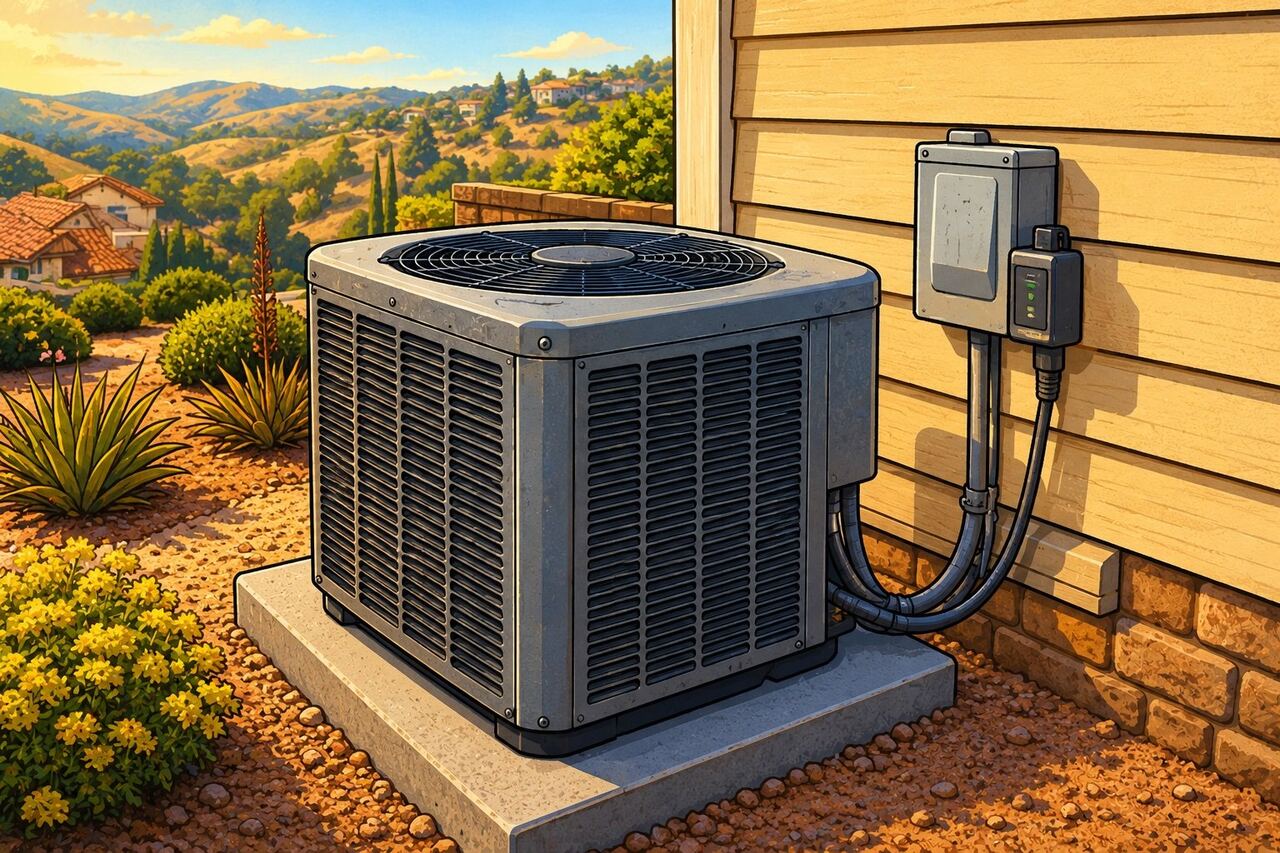
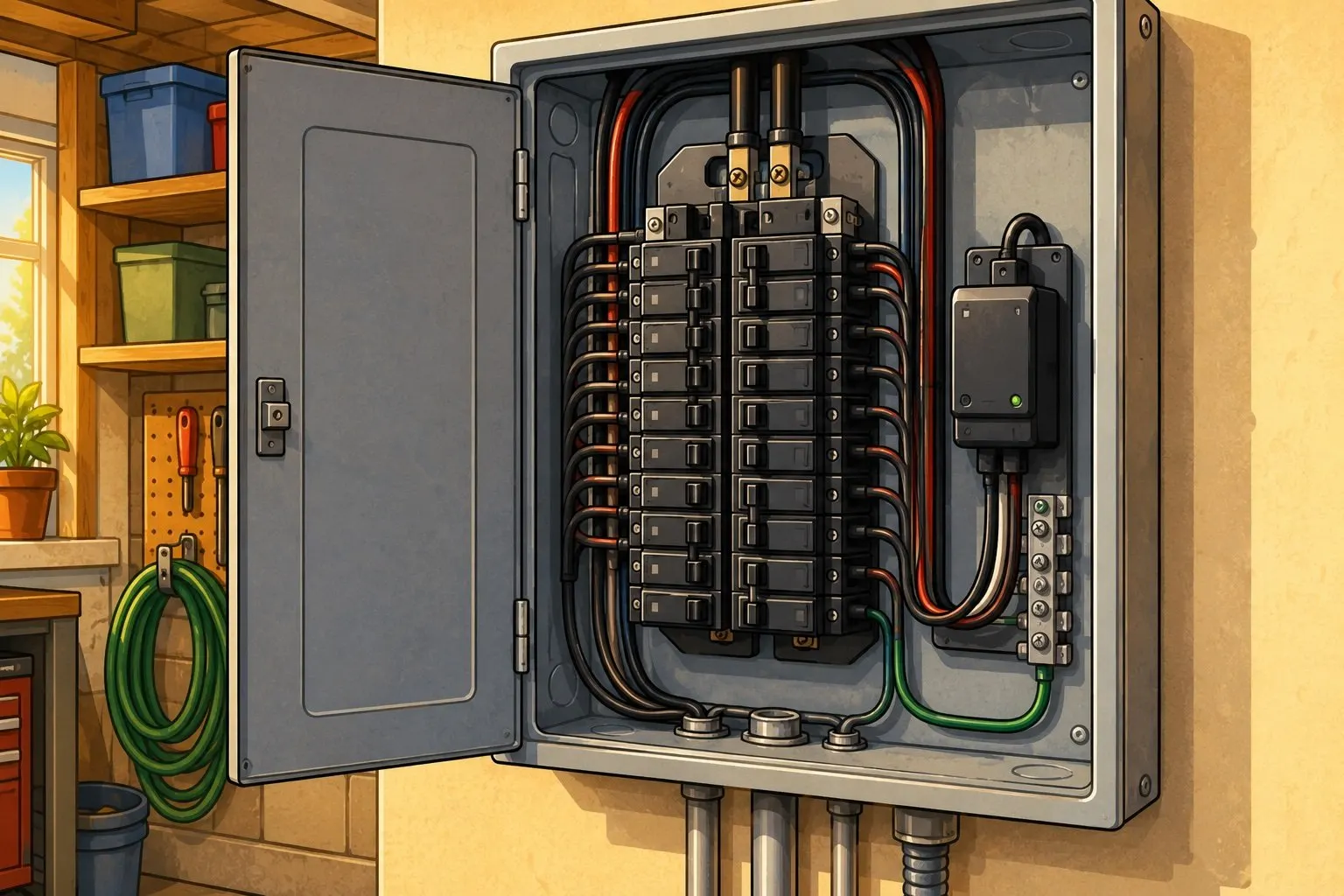
At the outdoor unit, look for a small rectangular device mounted on or near the disconnect box. It may be labeled SPD (surge protection device), surge protector, or transient voltage suppressor. At the main panel, look for a device mounted inside the panel enclosure or directly adjacent to it that is separate from your circuit breakers.
If you are not sure what you are looking at, do not open the electrical panel. Panels should only be inspected by a licensed electrician or HVAC technician. A quick service call is the safest way to get a clear answer.
Questions to Ask Your HVAC Technician
When you schedule your next AC checkup or service call with Jonas Energy Solutions, these are useful questions to raise:
- Does my outdoor unit have a dedicated surge protector installed?
- Does my main panel have whole-home surge protection in place?
- Is my system model particularly sensitive to power quality issues?
- What would adding surge protection cost for my specific setup?
A good technician will give you direct answers and honest cost estimates without pressure to act on the spot.
Backup Power and Surge Protection Working Together
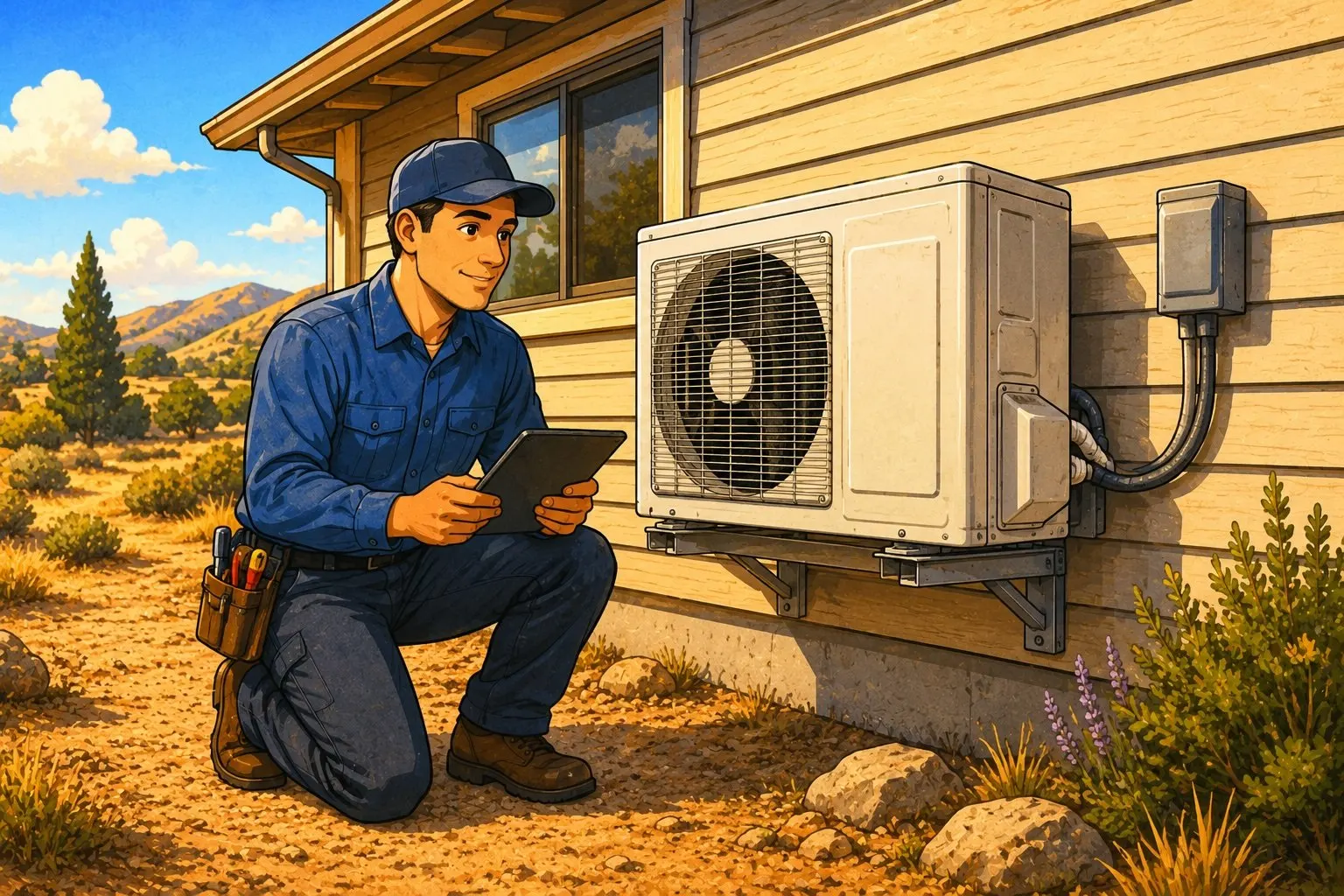
Surge protection and backup power address different threats, but they work best when both are in place. Surge protection guards your equipment during a power event. Backup power keeps your home running when the grid goes down.
Home Battery Storage During Outages
A home battery storage system can keep your AC, refrigerator, and essential circuits running during a PG&E shutoff or grid outage. Battery systems provide quiet, self-contained backup without the fuel costs or exhaust concerns of a generator. For homeowners who have navigated multiple PSPS events, battery storage is one of the more practical investments available for fire season.
Whole-House Generators and Transfer Switches
For longer outages, a whole-house generator provides sustained backup power for the entire home, including your HVAC system. Generator installation includes a proper transfer switch — a device that safely connects your generator to your home’s electrical system and prevents dangerous backfeeding to the utility grid. Jonas Energy Solutions installs and services whole-house generators throughout Lake County, with financing available for qualifying projects.
Why Surge Protection Still Matters Even With a Generator
When a generator or battery system transitions power, either at the start of an outage or when grid power returns, the switchover can create its own transient voltage event. Surge protection provides a buffer for your HVAC equipment during these transitions. The two systems work as a team. One does not replace the other.
What Jonas Energy Solutions Recommends for Lake County Homes
Every home has a different risk profile. The right protection combination depends on several factors:
- The age of your home’s wiring and electrical panel
- How close you are to the edge of the grid (areas like Middletown or Hidden Valley Lake see more frequent outages)
- Whether you have a single system or multiple high-efficiency units
- How often your neighborhood experiences brownouts, flicker, or PSPS events
The right answer for one home is not always the right answer for another.
Our Approach to Evaluating Your Home’s Risk
When Jonas Energy Solutions visits your home for an AC service call or system evaluation, our technicians review what surge protection is already in place and where gaps exist. We evaluate:
- The age and type of your HVAC equipment
- The condition of your electrical panel and existing protection
- Your home’s location and exposure to grid outage events
- Whether your system is inverter-driven or uses a variable-speed compressor
We give you a clear picture and honest options, not a list of add-ons to upsell.
A Jonas Family Membership maintenance plan includes regular checkups that help catch developing problems before they become expensive breakdowns. Proactive service is almost always less costly than emergency repair in the middle of a heat wave. Find out how a maintenance plan can help protect your system year-round.
Financing Options for Whole-Home Protection Upgrades
Surge protection installation, generator upgrades, and battery storage projects are all eligible for financing through Synchrony. For homeowners who want to address multiple protection layers at once, financing makes it possible to act before a failure happens rather than reacting to one in the middle of summer.
How to Get Started
If you are not sure what protection is already in place or where to start, the simplest step is a call. Our technicians will review your system, check your existing protection, and walk you through options that fit your home and your budget. There is no obligation and no pressure.
As Lake County’s locally owned HVAC and backup power specialists, we know how this grid behaves — and what it takes to keep your home running through it.
Call Jonas Energy Solutions at (707) 994-5911 or send us a message to schedule an evaluation. We serve Lakeport, Clearlake, Kelseyville, Middletown, Hidden Valley Lake, Lower Lake, and surrounding communities throughout Lake County, CA.