Wildfire season in Lake County has become something homeowners plan around, not just something we read about on the news. Even when flames are miles away, smoke can linger for days, ash can find its way into equipment, and Public Safety Power Shutoffs (PSPS) can leave neighborhoods without electricity.
A smart way to prepare is to treat wildfire season like a systems check for your home: protect the air you breathe, protect the equipment that keeps you comfortable, and make sure you can keep essentials running if the power goes out.
Below is a practical, homeowner-friendly guide to wildfire prep, focused on two areas that matter most when conditions turn: your HVAC system and your backup power.
Start with the two risks most homeowners overlook
Smoke is a health problem, not just a smell
Wildfire smoke carries tiny particles that can irritate lungs, trigger asthma, and make indoor air feel heavy and stale. In many homes, the HVAC system becomes the main tool for keeping indoor air safer, but only if it is set up to filter effectively and keep outside contaminants from slipping in.
Power outages create a chain reaction
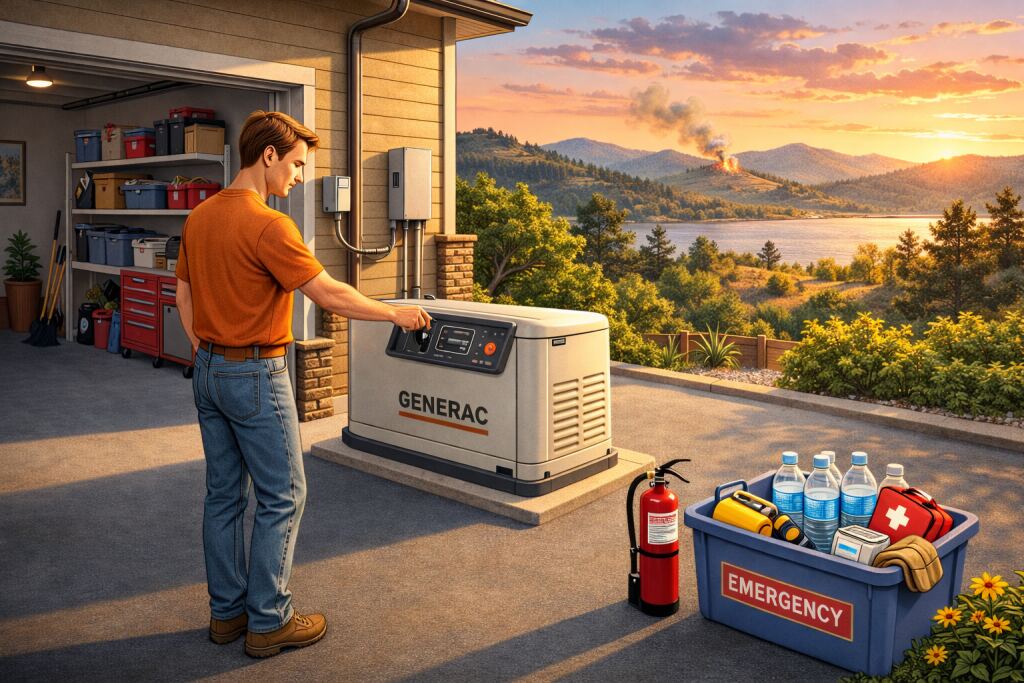
During PSPS events or storm-related outages, it is not just about the lights. You can lose refrigeration, medical devices, Wi‑Fi, well pumps, and even HVAC operation, depending on your system. If you have a standby generator (or you are considering one), wildfire season is the time to confirm it is ready, not the week you need it.
HVAC readiness: keep smoke and ash from wrecking comfort
Check your filter strategy (and upgrade if needed)
Your HVAC filter is your first line of defense, but not all filters are built for smoke.
- Standard 1-inch filters often catch larger dust, but they can struggle with fine smoke particles.
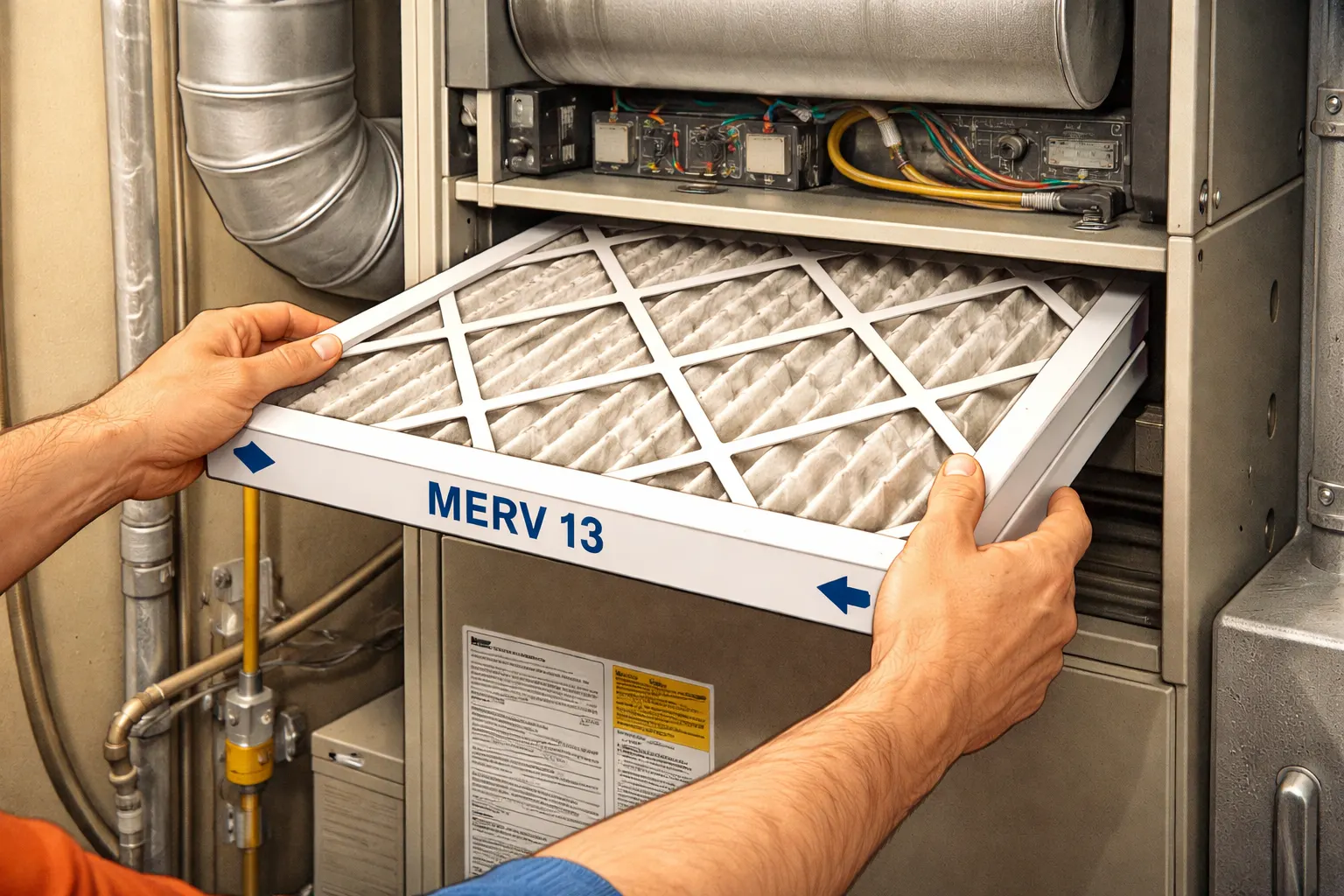
- Many homes benefit from higher-efficiency filtration (often MERV 13, depending on system compatibility).
Two important notes:
- A “better” filter is not automatically better for every system. Too restrictive of a filter can reduce airflow and stress equipment.
- During heavy smoke days, filters load faster. Plan on checking and replacing them more frequently.
Set your system up to filter continuously during smoke events
When smoke is present, your system may help more when it is moving air through the filter consistently. Many thermostats allow you to set the fan to run more often, or continuously, to improve filtration. If you are not sure what settings are safe for your system, get guidance before running it 24/7.
Inspect and seal the paths smoke uses to get inside
Smoke does not need a wide-open window to enter your home. Small gaps and leaks can do it.
Duct leaks and attic penetrations
Leaky ductwork can pull contaminated air from attics, crawlspaces, or wall cavities, then distribute it through the home. A duct inspection and targeted sealing can reduce smoke intrusion and improve energy efficiency.
Doors, windows, and returns
If your home has noticeable drafts, your HVAC system may be fighting an uphill battle during smoke events. Weatherstripping, sealing, and return-air placement all matter more than most people realize.
Protect outdoor HVAC components from ash buildup
Ash can collect on outdoor units, and during fire season, wind can carry debris that clogs coils and restricts airflow.
Simple homeowner steps
- Keep the area around the outdoor unit clear of leaves and debris.
- After ash exposure, gently rinse surrounding surfaces (only if conditions are safe and you are not creating more airborne particles).
If you are seeing reduced performance, unusual noises, or short-cycling, it is worth getting the system checked. Wildfire season is not the time to discover your equipment is running hot or struggling to breathe.
Consider indoor air quality upgrades that make wildfire season easier
If your household is sensitive to smoke, or you have had multiple “smoke week” events over the past few years, it may be time to go beyond basic filtration.
Whole-home filtration and air purification
A whole-home system can reduce particles and improve indoor comfort without relying on portable units in every room.
Learn more about indoor air quality options: Indoor air quality services
Air filtration and air purifiers
If you want to focus specifically on filtration and purification, this is a good starting point: Air filtration and air purifiers
Generator readiness: be prepared for PSPS and wildfire outages
Confirm your generator actually starts and carries load
A generator that “started fine last year” is not a plan.
Run a test, not just a glance
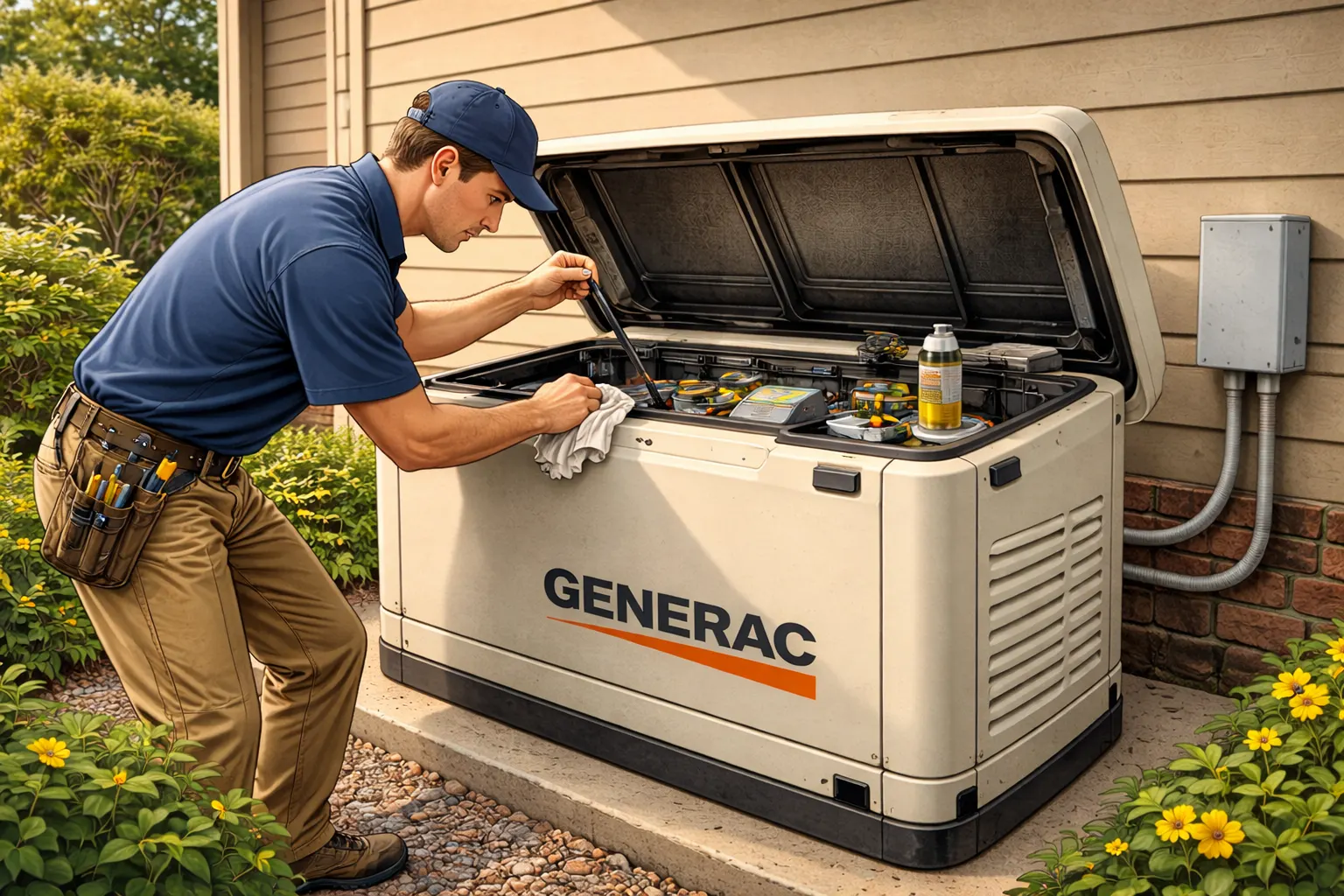
If you have a standby generator, schedule a test run to confirm it starts properly and can handle the circuits you expect to use. If you have a portable unit, confirm you can start it safely, and that you know how to connect it correctly ( never backfeed power into a panel without proper equipment).
Check fuel, oil, and service intervals
Generators are engines, and engines need routine care.
- Verify fuel supply (and rotation for stored fuel if applicable).
- Check oil and coolant (if your model uses coolant).
- Look for leaks, loose connections, or corrosion.
If it has been more than 12 months since the last professional maintenance, wildfire season is a good deadline to schedule a checkup.
Review safety features and safe operation basics
Carbon monoxide risk increases when people run generators improperly. Make sure you understand where your generator vents, that sensors are working (if equipped), and that you never operate portable generators in garages or near open doors/windows.
Make sure your household knows the “outage playbook”
Outages are stressful. A quick plan keeps things calm.
Here is a simple list to prep once and keep near the electrical panel or generator location:
- Which circuits are critical (refrigerator, medical equipment, well pump, Wi‑Fi, select lighting).
- Who will start or monitor the generator.
- Where instructions, shutoffs, and emergency contacts are located.
- What you will do if the generator does not start (backup plan, service call, safe shutdown).
Explore generator services and options in Lake County: Generator services
A practical wildfire-season checklist (HVAC + power)
Use this as a quick “two systems” checklist to knock out the essentials.
- HVAC filter checked, replaced, and upgraded if appropriate
- Thermostat fan settings reviewed for smoke days
- Ductwork and returns inspected for leaks or drafts
- Outdoor unit area cleared, performance checked
- Indoor air quality options reviewed (especially if anyone is sensitive)
- Generator test run completed (start + load)
- Fuel, oil, and service records verified
- Safety plan reviewed
(If any of these items are unclear for your equipment, it is better to confirm now than troubleshoot during a smoke event or outage.)
When to schedule service (and why timing matters)
Schedule HVAC service if you notice:
- Weak airflow or uneven cooling/heating
- Persistent smoke smell indoors even with windows closed
- System running longer than normal or cycling oddly
- Visible dust, ash, or buildup around vents or the outdoor unit
Schedule generator service if:
- You have not tested it recently
- It has not been professionally maintained in over a year
- You are not sure it can support the loads you expect
- You want to upgrade to a more reliable, home-ready backup power solution
Wildfire season is easier when your systems are ready
A lot of wildfire prep is about reducing unknowns. Clean, breathable indoor air and dependable backup power give you more control when outdoor conditions are unpredictable.
If you would like a professional tune-up or a readiness check before late spring arrives, Jonas Energy Solutions can help.