
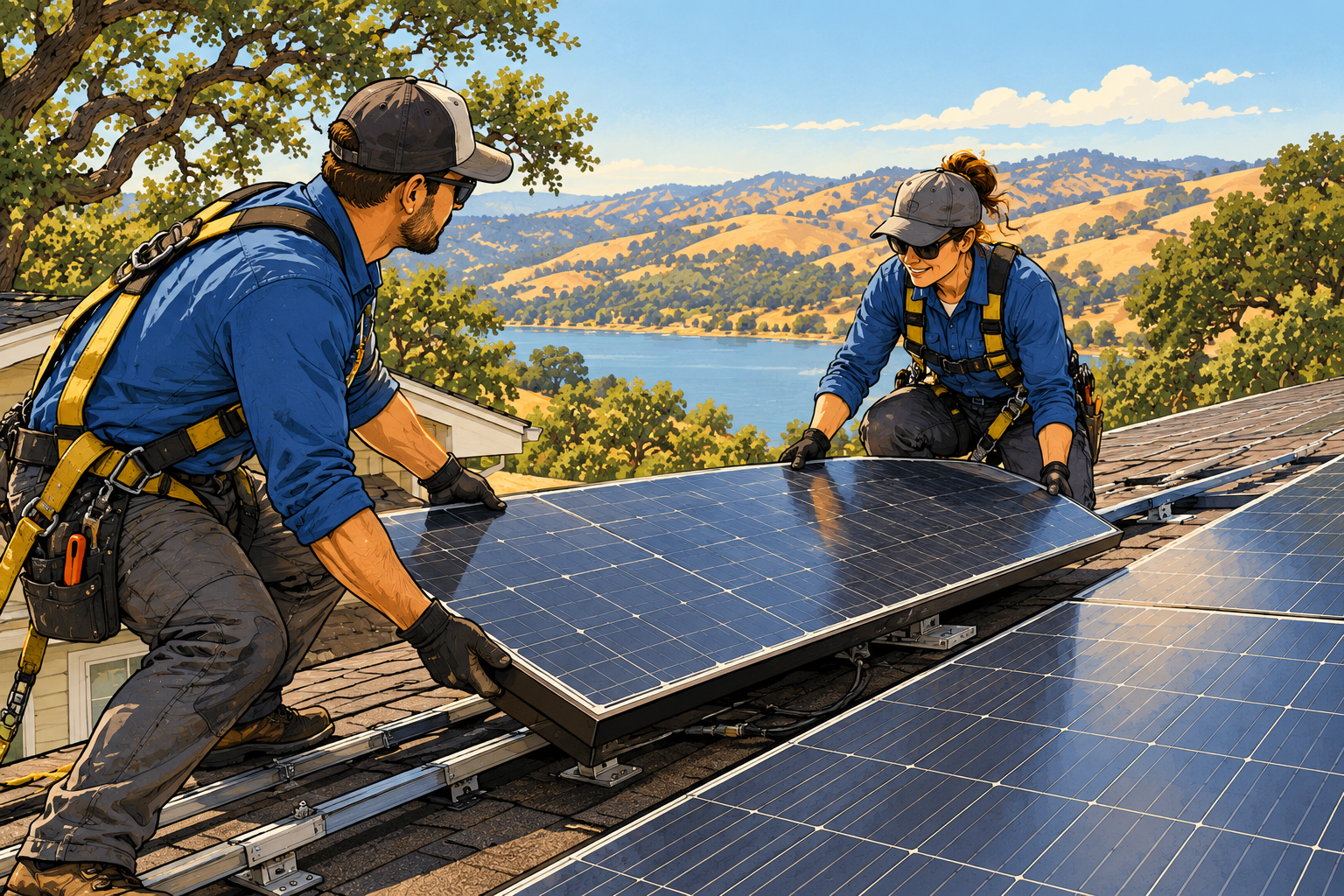
Fall is the smart season to handle roof work in Lake County, before winter storms roll across Clear Lake and the surrounding foothills. If you already have solar panels on your roof, the project gets a little more involved, but it is very manageable when the roofer and a licensed solar and electrical team coordinate from day one. This guide walks through how a roof replacement works when solar is in the picture, what to document, and how your system is safely brought back online.
When Solar Panels Need To Come Off For Roof Work
The short answer is that panels almost always need to come off for a full roof replacement, and often for larger repairs too. Roofers cannot properly tear off old shingles, replace underlayment, or install new flashing with racking and modules in the way. A qualified crew can remove panels, microinverters or optimizers, conduit, and roof attachments so the roofing team has a clean deck to work with.
For small, isolated repairs, such as a single damaged shingle or a minor flashing issue away from the array, partial removal may be possible. A licensed solar professional should still make that call. Walking on modules, prying at rails, or disconnecting wiring without shutting the system down safely can damage equipment, void warranties, and create a real shock or arc-flash hazard.
Why Your Roofer And Solar Team Must Coordinate
Roofing and solar are two different trades with two different sets of licenses, tools, and safety requirements. When they are treated as separate, disconnected projects, homeowners end up in the middle, chasing schedules and warranty questions. A coordinated plan avoids that.
Good coordination usually looks like this. The solar team surveys the array, plans a safe shutdown, and schedules panel removal a day or two before the roofers arrive. The roofers complete tear-off, deck repair, underlayment, and new roofing. Then the solar team returns to reinstall the racking on the new roof, reattach the modules, re-run conduit, and recommission the system. When one company can manage the electrical and solar side of that sequence, communication is simpler and there is a single point of accountability for the wiring, grounding, and final startup.
Documentation And Inspection Before Reinstallation
Before anything comes off the roof, the solar team should record the existing layout, wiring runs, string configuration, and inverter or optimizer settings. Photos of every attachment point, junction box, and conduit path are extremely helpful when it is time to put the system back together, especially if there are any changes to roof penetrations.
- Baseline production readings and inverter data pulled before shutdown
- Photos of the array layout, rail spacing, and every roof penetration
- Condition notes on modules, microinverters or optimizers, conduit, and connectors
- Confirmation that the new roof penetrations will be properly flashed and sealed
- A written scope covering removal, storage, reinstallation, and recommissioning

What Happens During Removal, Roofing, And Reinstallation
On removal day, the solar team shuts the system down at the inverter and main service disconnect, verifies there is no voltage, and then carefully detaches the modules, wiring, and racking. Panels are stored on padded supports in a dry, shaded spot on your property so they are protected from impact and weather. The roof attachments are removed, and any old sealant is cleaned up so the roofers can start with a clean deck.
Once the new roof is complete, the solar team returns to mount new flashings and rails in locations that suit the updated roof. Modules go back up, wiring is reconnected, and every roof penetration is sealed with roof-appropriate flashing rather than a smear of caulk. If your system has aged inverters, worn connectors, or corroded conduit fittings, this is the natural moment to talk about replacements while everything is accessible.
System Testing And Recommissioning After The Roof Is Done
Recommissioning is more than flipping a breaker. A licensed technician checks torque on electrical connections, verifies grounding and bonding, tests insulation resistance where appropriate, and confirms that each string or microinverter is producing as expected. Monitoring is reconnected so you can see real-time production, and the numbers are compared against the baseline readings from before the project. If anything is off, it gets diagnosed before the crew leaves.
What If Your Original Solar Installer Is Out Of Business
Many Lake County homeowners installed solar years ago through companies that are no longer around. That is a common situation and it does not leave you stuck. A licensed local contractor can evaluate the system, pull production data, inspect the array and wiring, and take over service for a system it did not originally install. Jonas Energy Solutions works on existing solar systems from a wide range of manufacturers, so you do not need to track down a defunct installer just to move forward with roof work.
During the evaluation, the technician can flag any pre-existing issues, such as loose rail hardware, sun-damaged wiring, or aging inverters, so you can decide what to address while the panels are already down. Combining that with roof work often saves time and labor compared to handling problems piecemeal later. If you are also thinking about broader upgrades, our team can talk through options like battery backup, panel-service updates, or pairing solar with a heat pump. You can learn more about our solar panel repair and maintenance services and explore additional options on our solar and battery services page.

Planning Roof And Solar Work Before Rainy Season
In Lake County, fall is the sweet spot for this kind of coordinated project. Summer heat waves have passed, storms have not yet set in, and roofers and solar crews both have more predictable schedules. Starting the assessment early gives you time to line up permits, order materials, and sequence the trades so your system is only offline for a short window. It also helps you avoid emergency scrambles when the first big storm exposes a roof problem you already suspected.
While the team is on site, it can be a good time to look at other systems that see heavy fall and winter use. If you have been putting off seasonal HVAC maintenance in Lake County, thinking about generator installation in Lake County before the next PSPS event, or planning a water heater replacement in Lake County, grouping these conversations with your solar and roof planning can save trips and simplify decisions.
Do my solar panels have to be removed for a full roof replacement?
In almost every case, yes. Roofers need clear access to the deck to properly tear off old materials, replace underlayment, and install new flashing. A licensed solar team removes the modules, racking, and wiring first, then reinstalls everything on the new roof.
How long will my solar system be offline during the project?
For most homes, the system is offline from the day panels are removed until reinstallation and recommissioning are complete, often several days to a couple of weeks depending on roof size, weather, and crew schedules. Careful coordination between the roofer and solar team keeps that window as short as possible.
Can Jonas Energy Solutions service a solar system it did not install?
Yes. Our licensed team regularly evaluates, removes, reinstalls, and services solar systems from many manufacturers, including systems whose original installer is no longer in business. We inspect the array, wiring, and inverters, then walk you through the options.