
The first cold morning of the season arrives. You have only ever used your ductless mini split to cool the house, so you press the heat button and wait. Is that faint hum normal? And what about the steam drifting off the outdoor unit? This guide walks through mini split heating in winter in plain language: the settings that matter, how to care for the outdoor unit, and the clear signs that mean it is time to call someone.
Why Winter Is a New Job for a System You Mostly Used for Cooling
Plenty of foothill homeowners had a ductless system installed to take the edge off summer, and heat mode was an afterthought. Then November shows up. Suddenly the same unit on the wall is your main source of warmth.
Here is the good news. A ductless mini split heats and cools with the same equipment, so there is no new machine to learn, just a new season of behavior to understand. Warm air comes out of the indoor unit more gently than it does from a furnace. The outdoor unit runs its own routines in cold, damp weather. And a few small habits make a real difference in comfort.
We see these questions every fall in Lake County and El Dorado County. As a family-owned, fourth-generation company and a Mitsubishi Diamond Contractor, we can tell you that many of them come down to settings and simple upkeep rather than a failed part. If you want the bigger picture on how we approach heating services across both counties, that page is a good starting point. Everything below is general guidance. Keep your Mitsubishi owner's manual handy and treat it as the final word for your exact model.
Heat Mode, Auto Mode, Setpoint, and Fan Settings
Heat mode tells the system to heat only, while auto mode lets it choose between heating and cooling based on room temperature and setpoint. Locking in heat mode for winter keeps behavior predictable. Still, confirm the recommended setting in your Mitsubishi owner's manual.
Heat Mode vs Auto Mode
Why does this matter? Auto mode can be handy in spring and fall, when mornings are cold and afternoons warm up. Deep winter is different. On occasion the system may switch behavior when you did not expect it, and choosing heat mode removes the guesswork. One more thing worth checking: if someone in the household keeps flipping modes from the remote, that alone can explain a lot of confusing weeks.
Choosing a Setpoint and Fan Speed
Pick a moderate setpoint you can live with and leave it there. Cranking it up will not make the system heat faster. It simply keeps running toward a number that may be higher than you need.
Fan speed follows similar logic. An automatic fan setting is usually a sensible default, since the unit adjusts airflow as the room warms, while a lower fixed speed can feel quieter but may leave far corners cooler. Your manual explains the options for your model. For more background, our heat pump service articles cover related questions.

A steady, moderate schedule usually feels more comfortable than big overnight drops.
Why Big Overnight Setbacks Can Backfire
Furnace habits die hard. Many of us grew up turning the heat way down at bedtime and back up in the morning.
With a ductless system, that approach often disappoints. Drop the setpoint far overnight and the walls, floors, and furniture cool down along with the air. By morning, the system has a big gap to close. It works hard while the room still feels chilly, and you end up waiting longer for comfort, maybe wondering if the unit is weak. Usually it is just recovering from a deep drop.
A modest, steady schedule usually feels better than dramatic swings, and small adjustments between day and night are fine. Savings from setbacks vary by home and by how the system is set up, so we will not promise a number here. Want a schedule tailored to your house? Ask your installer or check the scheduling options in your manual.
Keeping the Outdoor Unit Clear and Understanding Defrost Steam
During cold, damp weather, frost can build on the outdoor coil. To melt it, the system briefly switches into defrost mode, and the outdoor unit may release steam or water vapor while the indoor fan pauses or slows. This is usually normal and typically passes within several minutes, but confirm timing against your manufacturer's guidance.
Clearing Snow, Ice, and Leaves
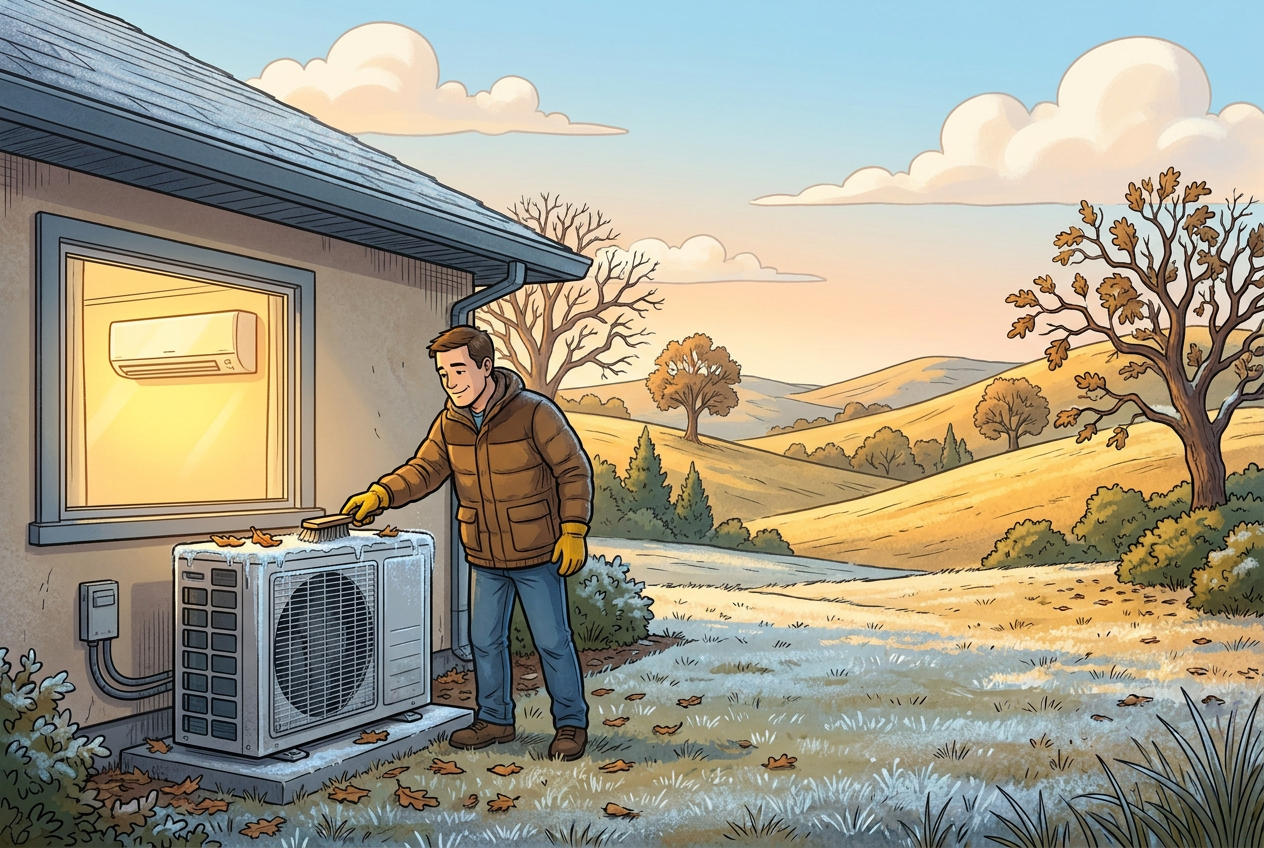
The outdoor unit needs room to breathe. Oak leaves, pine needles, and drifted snow can all restrict airflow, and foothill properties tend to collect plenty of all three. A quick routine keeps things moving:
- Turn the system off at the remote or thermostat before going near the unit.
- Brush loose snow and leaves off the top and sides with a soft broom or a gloved hand.
- Clear debris and vegetation from around the unit so air can move in and out.
- Make sure nothing is stacked against it, such as firewood, tarps, or storage bins.
- Leave stubborn ice alone. Never chip at it with tools, because the coil fins are delicate and easy to damage.
- Restart the system and watch whether it runs normally.
What Defrost Mode Looks Like
Picture a cloud rising off the outdoor unit on a frosty morning while the indoor fan goes quiet for a bit. From the kitchen window, it can look alarming. In most cases, though, it is the system doing its job. Our post on whether a heat pump can keep a home warm in a freeze goes deeper on how defrost cycles fit into cold weather operation.
What is not normal? Heavy ice that keeps growing and never clears. Or a unit that never returns to heating afterward.

A clean filter helps the indoor unit move warm air freely. Follow your owner's manual for the exact method.
Cleaning the Indoor Filter for Better Warmth and Airflow
A clogged filter is one of the most common reasons a room feels less warm than it should. Dust and pet hair restrict airflow, which makes it harder for the indoor unit to move heat into the space.
During heavy use, checking the filter every month or so is a reasonable habit (homes with pets or a wood stove may need a look more often). The process is short. Switch the unit off, open the front panel, and slide the filter out. Gently vacuum or rinse it, then let it dry fully before it goes back in. Your Mitsubishi manual spells out the exact method for your model, so follow it over any general steps here.
Simple, cheap, and often overlooked.
When a Service Visit Makes Sense
Not every odd sight or sound means trouble. Knowing the difference saves you worry, and it saves a service call when nothing is wrong. It also helps you act quickly when something is. So if your heat pump is not heating or your mini split seems to be not working, start with the simple checks above before assuming the worst.
Normal Winter Behavior
Steam from the outdoor unit, a short pause in airflow, light dripping of water near the outdoor unit. All of these are common in cold weather, and they tend to come and go on their own.
Signs It Is Time to Call
- Still no heat after you have cleaned the filter and cleared the outdoor unit.
- Ice that builds up and will not clear.
- An error code or blinking light that comes back after a restart.
- Unusual smells from the indoor or outdoor unit.
- The system shutting off again and again.
One firm rule: do not open panels or try to handle refrigerant yourself. Those jobs belong to a trained technician.
A maintenance plan is one way to catch small issues before they turn into a cold house. Members pay a $69 trip and diagnostic fee instead of $149 and get 20% off non-warranty repair parts. There are no long-term contracts, and memberships start from $29 a month. When you are ready, you can request service online. And if the heat goes out at the worst possible time, we offer 24/7 emergency service.