
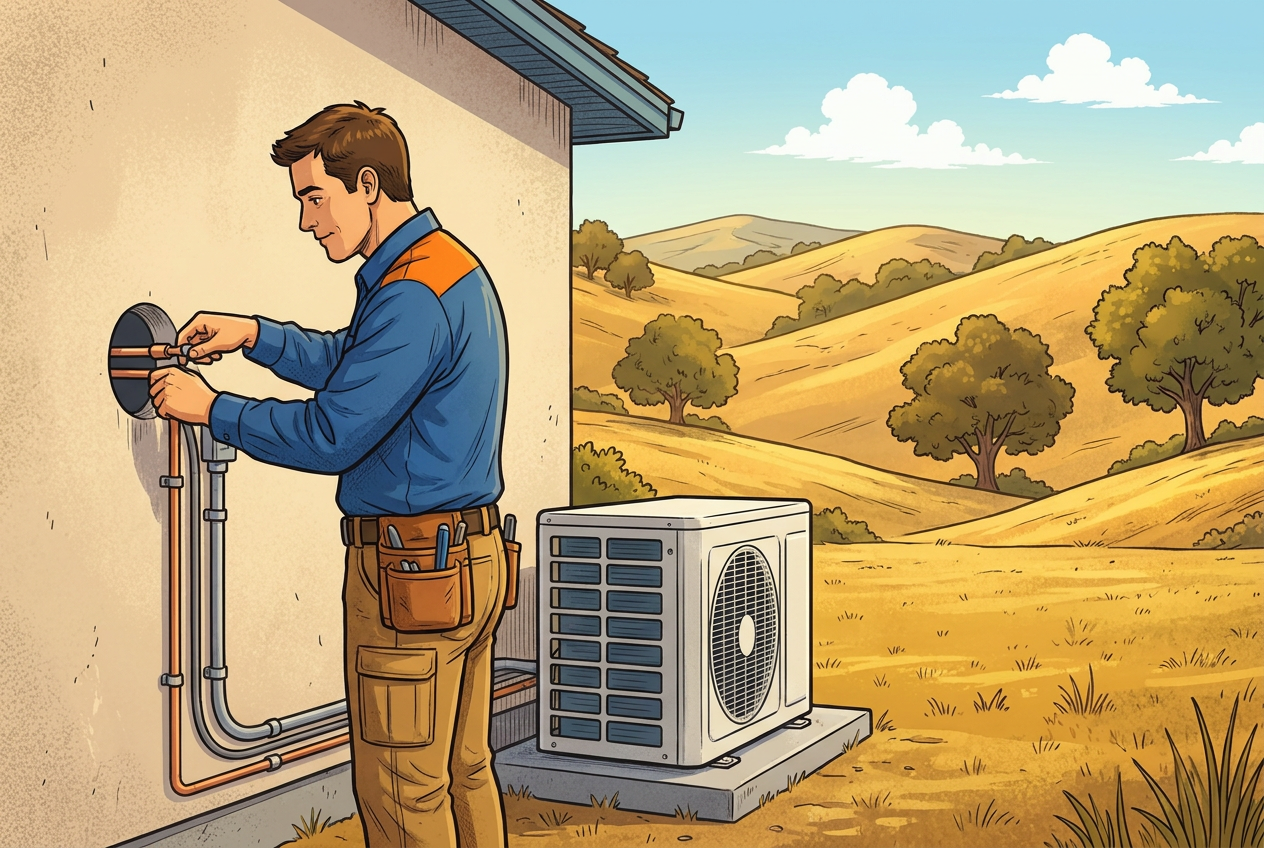
Ductless mini-split systems have become one of the more popular ways to add heating and cooling to a Lake County home, and it is easy to see why the DIY route looks tempting. A compact outdoor unit, a wall-mounted indoor head, a short line set. On the surface it looks manageable. The reality is that DIY mini-split installation risks go well beyond mounting brackets — refrigerant handling, electrical code compliance, and manufacturer warranty requirements all demand licensed expertise that most homeowners simply do not have. Knowing where the process gets complicated is the first step toward protecting both your investment and your home.
Why DIY Mini-Split Kits Make Installation Look Easier Than It Is
What Pre-Charged Line Sets and Quick-Connect Fittings Leave Out
Pre-charged line sets and quick-connect fittings simplify the mounting steps. They do not eliminate the need for refrigerant charge verification, proper electrical load calculations, or the vacuum process that removes moisture and air from the line set before startup. All of those steps require licensed expertise and, in the case of refrigerant, federal certification. Kit marketing focuses on what looks approachable: drilling a hole through the wall, sliding the line set through, snapping fittings together. The harder work gets far less attention in product instructions.
The Steps That Marketing Materials Skip Over
Anyone who handles refrigerant in the United States is required to hold an EPA Section 608 certification. That applies to connecting or charging a mini-split's refrigerant lines, not only to large commercial systems. Most homeowners working from a kit are not certified, which means the installation may not meet federal handling requirements before local permitting is even considered. The ductless mini-split installation services in Lake County that a licensed contractor provides include all of these steps as a matter of course, not as optional add-ons.
A line set connection that looks tight can still leak slowly. An undersized breaker trips repeatedly. A system that was never properly evacuated loses efficiency within the first season. These problems rarely announce themselves right away, which is part of why they end up costing more to fix than a professional install would have cost in the first place.
The Real Costs When a DIY Mini-Split Install Goes Wrong
Refrigerant Leaks That Quietly Drain Efficiency
A slow refrigerant leak reduces both cooling and heating capacity over time. The system has to run longer to do the same job. Higher energy bills often show up long before anyone suspects the refrigerant charge is the problem. Think about a homeowner who skips the vacuum step to save a few hours: trapped moisture in the line set makes the compressor work harder, and the first real sign of trouble is a climbing utility bill the following summer, not a dramatic system failure that is easy to trace back to the install.
Electrical Wiring Mistakes That Create Bigger Problems
Mini-splits need a dedicated circuit sized to the manufacturer's specifications, along with a properly installed disconnect. The dedicated circuit and electrical disconnect requirements for mini-splits are specific to each unit's amperage draw and cannot be generalized. Common DIY electrical mistakes include:
- Using the wrong wire gauge for the unit's amperage draw
- Sharing a circuit with other appliances instead of running a dedicated line
- Skipping the required disconnect switch near the outdoor unit
- Leaving wire connections exposed to weather at the outdoor unit
Any one of these can cause a breaker to trip repeatedly or, in more serious cases, create a fire risk. Older Lake County homes with aging electrical panels are particularly vulnerable. The existing wiring may already be operating close to its limits before a new load is ever added.
Warranty Coverage That Disappears After an Unpermitted Install
A mini-split is a significant investment. The manufacturer warranty is often the only protection against a compressor or component failure years down the road. Most manufacturers generally require installation by a licensed contractor for the warranty to stay valid. Always confirm current terms directly with the manufacturer before purchasing. Once that coverage is void, any future repair becomes an out-of-pocket cost, even if the equipment itself was never the underlying problem.
 A code inspection reviews the electrical disconnect, wire sizing, line set support, and condensate drainage. These are details that a permitted professional installation is required to meet.
Permits and Codes That Apply to Ductless Systems in Lake County
Ductless mini-split installations in Lake County typically require both an electrical permit and a mechanical permit. These confirm that the wiring, disconnect, refrigerant lines, and condensate drainage meet current California building and safety codes. Skipping them means skipping the safety inspection that catches problems before they cause damage. Unpermitted work does not just create legal exposure. It leaves real problems undetected until they show up as water damage, a tripped breaker, or a system that simply stops working.
What a Code Inspection Actually Reviews
An inspector reviews the electrical disconnect, wire sizing, line set support, and condensate drainage routing, among other details. Problems that a trained eye would catch during inspection, such as a poorly sloped drain line or an undersized wire run, can go unnoticed for months in a DIY install that skips this layer of review. By the time they surface, the cost of correction is almost always higher than the permit fee would have been.
What a Professional Mini-Split Installation Actually Includes
Proper Sizing and Placement for the Specific Room
Correct sizing depends on the square footage, insulation levels, window exposure, and layout of the specific room, not a generic chart from a product listing. Placement matters just as much. A unit mounted too high, too close to a corner, or facing the wrong direction can create uneven comfort even when the equipment itself is the right size. Getting both decisions right at the start is what separates a system that performs well for years from one that runs constantly and never quite reaches the set temperature.
Refrigerant Charge Verification and Leak Testing
A licensed installer pressure tests the line set, pulls a deep vacuum to remove moisture and air, and verifies the refrigerant charge against the manufacturer's specification. This process is one of the most common sources of long-term performance problems when it is skipped or done incorrectly. It is also one of the steps that a DIY kit simply cannot replace, regardless of how well the fittings connect.
Documentation That Protects the Manufacturer Warranty
Professional installation typically includes permit sign-off, a documented startup checklist, and manufacturer registration for the warranty. The Jonas Energy Solutions licensed HVAC contractor credentials and Mitsubishi Diamond status are part of what supports that documentation process, giving homeowners a paper trail that matters when a warranty claim comes up years later. That kind of record is not something a DIY install produces.
 Ice forming on the indoor unit is one of several warning signs that a mini-split may not have been installed or charged correctly.
Warning Signs That a Mini-Split Was Not Installed Correctly
Comfort and Performance Red Flags to Watch For
A mini-split that was installed incorrectly does not always fail immediately. It often keeps running, just poorly. Some warning signs tend to surface first:
- Uneven temperatures between rooms served by the same system
- A unit that runs constantly without ever reaching the set temperature
- Unusual rattling, hissing, or gurgling sounds from the indoor or outdoor unit
- Ice forming on the outdoor unit outside of normal winter operation
None of these are harmless quirks. Each one points to a specific installation or setup issue that tends to get more expensive the longer it goes unaddressed. The Jonas Family Maintenance Plan for mini-split system checkups and refrigerant verification covers these checkpoints on a set schedule, which is often the most practical way to catch a developing problem before it becomes a repair bill.
Rising Energy Bills After a New Install
A properly sized and charged mini-split should run efficiently. If energy bills climb after a new install rather than dropping, that is a reliable signal something is off. The issue could be a low refrigerant charge, an incorrectly sized unit, or an electrical problem causing the system to work harder than it should. Having the system checked by a licensed technician before assuming the equipment is defective is almost always the right first step.
How to Get Mini-Split Installation Right the First Time in Lake County
Questions to Ask Before You Hire an Installer
Before hiring any installer, confirm that the technician holds an EPA Section 608 certification for refrigerant handling, that the job will include required electrical and mechanical permits, that the manufacturer warranty terms will be met, and that the system will be pressure tested and vacuum charged before startup. These are not unreasonable questions. A qualified contractor will answer all of them without hesitation. If an installer deflects or says the permits are optional, that is a clear signal to keep looking.
Financing Options That Make Professional Installation Accessible
Cost is one of the main reasons homeowners consider the DIY route. Professional installation does carry a higher upfront cost than a kit, but the math changes quickly when you factor in a voided warranty, a refrigerant recharge, or electrical corrections after the fact. Financing options for mini-split installation in Lake County can make it easier to do the job right the first time without stretching the budget all at once. Spreading the cost over time is a reasonable approach when the alternative is a system that underperforms for years.
Do I need a permit to install a mini-split in Lake County, CA?
Yes. Ductless mini-split installations in Lake County typically require both an electrical permit and a mechanical permit. These permits trigger an inspection that confirms the wiring, disconnect, refrigerant lines, and condensate drainage meet current California building and safety codes. Skipping permits also skips that safety check.
Can I install a mini-split myself if I buy a pre-charged kit?
Pre-charged kits simplify the mounting steps, but they do not eliminate the need for EPA Section 608 certification to handle refrigerant, proper electrical load calculations, a dedicated circuit, or the vacuum process required before startup. Most DIY installations also do not meet the manufacturer's warranty requirements, which typically require a licensed contractor.
What voids a mini-split manufacturer warranty?
Most manufacturers require installation by a licensed contractor for the warranty to remain valid. An unpermitted or unlicensed installation can void the warranty entirely, meaning any future compressor or component failure becomes an out-of-pocket expense. Always confirm the current warranty terms directly with the manufacturer before purchasing.
How do I know if my mini-split was installed incorrectly?
Common signs include a unit that runs constantly without reaching the set temperature, unusual rattling or hissing sounds, ice forming on the indoor or outdoor unit, uneven temperatures between rooms, and energy bills that rise after installation instead of dropping. A licensed HVAC technician can diagnose whether the issue is installation-related or equipment-related.